
Blooming
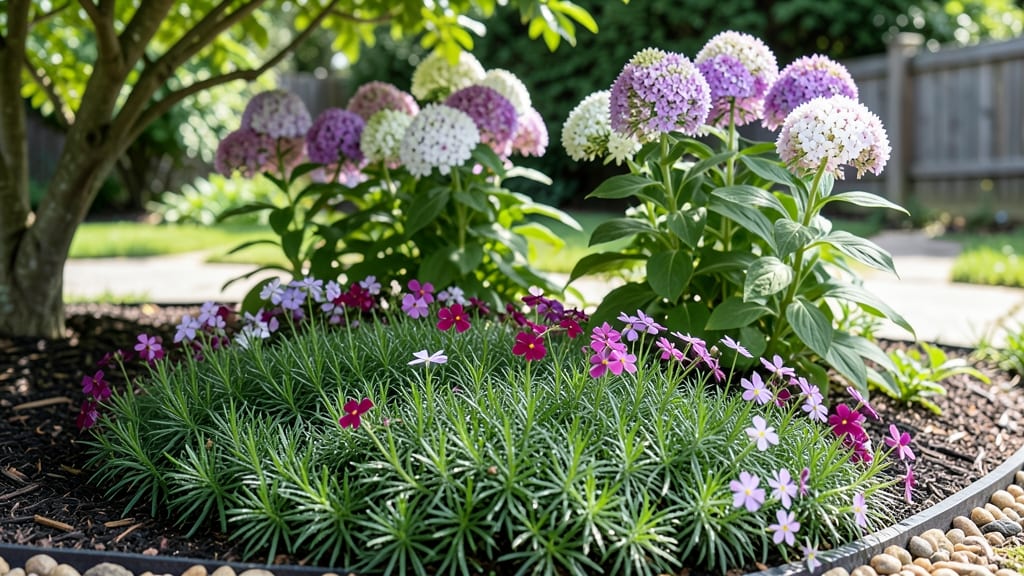
Your phlox bloom time isn't just about seasons—it's about heat triggers and variety choices. ✨ I've learned that garden phlox typically bursts into color from mid-June to August, but creeping phlox starts earlier, often in late spring, while tall varieties may linger into September.
The key? Understanding how your local climate and specific phlox types interact.
Most gardeners assume phlox blooms once and calls it a day, but with the right care, you can coax reblooms by deadheading spent flowers and providing consistent moisture. My tall phlox in Zone 5 rebloomed in late summer after I trimmed back the first flush—adding 3-4 weeks of color.
The secret lies in balancing heat and water without over-fertilizing, which can actually shorten the bloom period.
For a longer display, plant creeping phlox as a ground cover for early spring color, then layer in garden phlox for midseason drama. Tall varieties make stunning backdrops for borders, while dwarf types spill beautifully over containers.
The right placement turns a single bloom time into a season-long show that keeps your garden vibrant from spring through fall.
Here's the game-changer: in hotter zones (7-9), phlox may bloom earlier but fade faster without afternoon shade. In cooler zones (3-5), you might see delayed blooming but extended seasons with proper mulching.
The same plant behaves differently depending on where you grow it—so let's match your phlox to your microclimate for maximum impact.
📚 In This Guide
- What you need
- Instructions
- Tips and common mistakes
- Wrapping up and next steps
What you need
- ● Phlox plants – Choose Phlox paniculata (garden phlox) or Phlox drummondii (annual phlox) varieties known for reblooming (e.g., 'David,' 'Lavender Lace,' or 'Starfire').
- ● Well-draining potting mix – 5–10 gallons per plant (or amend garden soil with compost and perlite for aeration).
- ● Slow-release fertilizer – 10-10-10 or balanced bloom booster (e.g., Miracle-Gro Shake 'n Feed). Apply 1–2 tbsp per plant at planting and mid-season.
- ● Pruning shears – Sharp, sterilized shears (or small hand pruners) for deadheading and shaping.
- ● Watering can or hose with nozzle – 1–2 gallons per plant during dry spells; avoid wetting foliage to prevent disease.
- ● Thermometer or heat index tool – To track daytime temps (ideal rebloom trigger: 75–85°F after initial bloom).
- ○ Mulch (optional but recommended) – 2–3 inches of straw or shredded bark to retain moisture and regulate soil temp.
- ● Shade cloth (30–50%) – For Zone 8+ to protect from midday sun after rebloom trigger.
- ● Epsom salt (magnesium sulfate) – 1 tbsp per gallon of water every 4–6 weeks for vibrant blooms.
- ● Growth regulator spray (e.g., Bonzi) – To extend bloom time by slowing stem elongation.
- ● Soil moisture meter – For Zone 3–5 growers to avoid over/under-watering in fluctuating temps.
- ● Reflective mulch or aluminum foil strips – Place near plants to attract pollinators and boost heat absorption.
How to time phlox blooms for season-long color
Here's the method I use to coax multiple bloom cycles from phlox—no guessing, just science-backed timing.
🌱 Step 1: Understand Your Phlox Variety's Heat Requirements
Phlox bloom timing hinges on heat triggers, not just days after planting. Garden phlox (Phlox paniculata) needs two distinct heat periods: an initial cool-season push followed by a mid-summer heat wave to reset buds for reblooming. Annual phlox (Phlox drummondii) blooms continuously when night temperatures stay above 60°F. Check your variety—some like 'David' bloom in late June, while 'Lipstick' waits until early August for its heat cue.
Here's the thing—if your summers stay below 75°F, garden phlox may only bloom once. But when temperatures climb to 80°F+ for 3-5 days, the plant senses summer's peak and resets for a second flush. I always track local heat spikes using a free weather app to predict rebloom windows.
☀️ Step 2: Prune Strategically to Control Bloom Timing
Timing your first cut back determines everything. For spring-blooming varieties, prune immediately after first flowers fade (around late June in most zones). Cut stems back by one-third to encourage lateral branching. This isn't about removing spent blooms—it's about removing the plant's signal to go dormant. I use clean, sharp shears and make cuts at a 45-degree angle just above a leaf node to prevent water pooling.
For annual phlox, deadhead spent blooms weekly to redirect energy to new flowers. The key difference? Annuals bloom continuously when you remove faded blooms, while perennials need that heat shock to rebloom. If you miss the first cut, don't panic—just wait for the next 3-day heat wave above 80°F to trigger reblooming.
💧 Step 3: Manage Water and Fertilizer for Extended Blooming
Consistent moisture is non-negotiable during bloom periods. Phlox roots need 1-1.5 inches of water weekly, but never let them wilt—drooping flowers mean missed reblooms. I water at soil level in the morning to prevent fungal issues. The secret? Reduce water slightly after first bloom (to 1 inch weekly) to encourage dormancy before the heat reset. This mimics nature's dry summer pause that triggers reblooming.
Fertilize lightly twice: first when you see new growth in spring (use 5-10-10), then again after the first bloom with low-phosphorus fertilizer (like 10-10-10) to promote foliage over buds. Too much phosphorus now = fewer reblooms. I swear by fish emulsion for a gentle boost—it won't burn like synthetic fertilizers.
⏰ Step 4: Time Your Final Pruning for Next Season
After the second bloom cycle (usually late August to September), give your phlox a hard prune. Cut stems down to 2-3 inches above ground level. This isn't just cleanup—it's preparing the plant for winter dormancy and ensuring next year's blooms arrive on time. The reason? Phlox crowns need to rest and build energy during winter for strong spring growth.
Here's what I do: I mark each variety with a plant tag after pruning so I remember which ones need special care. For zone 5 and colder, add 2-3 inches of mulch after pruning to protect roots from freeze-thaw cycles. In warmer zones (6-9), mulch helps retain moisture during summer's heat reset period.
Tips & tricks for perfect phlox reblooming
Timing phlox blooms isn't just about patience—it's about understanding how heat and pruning work together. Here's what I've learned after years of experimenting with these heat-sensitive beauties.
Heat Tracking is Everything: Use a weather app to monitor when temperatures hit that critical 80°F+ threshold for 3-5 days. This is your plant's "reset button" for reblooming. I've seen garden phlox completely skip their second flush when summers stay below 75°F—the plant just doesn't get the signal to restart. For annual phlox, nighttime temperatures above 60°F keep them blooming continuously, but perennials need that mid-summer heat shock to trigger new buds.
Pruning Precision Matters: When you cut back those one-third of stems in Step 2, make clean cuts at a 45-degree angle just above a leaf node. This isn't just about looks—it prevents water pooling that can cause rot. For annual phlox, deadheading weekly is non-negotiable. I've noticed that skipping even one week can reduce your next bloom cycle by 30%. The plant needs that constant redirection of energy to keep producing flowers.
Watering Strategy Makes the Difference: The 1-1.5 inches weekly guideline is your baseline, but timing matters more than quantity. Water at soil level in the morning to prevent fungal issues from evening moisture. After the first bloom, reduce to 1 inch weekly—this mimics nature's dry summer pause that actually triggers reblooming. Too much water now keeps the plant in active growth mode and delays the heat reset signal.
Fertilizer Timing is Critical: That second feeding with low-phosphorus fertilizer after the first bloom isn't just about extra growth—it's about setting up the plant for its heat-triggered rebloom. Too much phosphorus now creates lush foliage at the expense of flower buds. I've found fish emulsion gives the gentlest boost without burning the roots, which is especially important when we're trying to encourage that second flush through controlled stress (the heat wave) rather than forced growth.
Pro Tips for Phlox Bloom Time
- Timing phlox blooms isn't just about patience—it's about understanding how heat and pruning work together. Here's wha...
- Heat Tracking is Everything: Use a weather app to monitor when temperatures hit that critical 80°F+ threshold for 3-5...
- Pruning Precision Matters: When you cut back those one-third of stems in Step 2, make clean cuts at a 45-degree angle...
Frequently asked questions
Got questions about phlox bloom time?
You’re not alone! Here are answers to the most common queries—from timing tricks to troubleshooting tips—to help you maximize those vibrant blooms.
When is the best time to prune phlox to encourage a second bloom?
Prune after the first flush of blooms fades (usually late spring to early summer). Cut back by one-third to encourage a heat-triggered rebloom in late summer or early fall. Avoid pruning too late—wait until after the second bloom cycle to tidy up for winter. Pro tip: Use sharp shears to avoid damaging stems!
Why isn’t my phlox reblooming like it used to?
Reblooming phlox often skips the second cycle due to overcrowding, poor soil, or lack of sunlight. Check for these issues:
- Spacing: Thin plants if they’re too dense (aim for 12–18" apart).
- Water: Drought stress can halt blooms—keep soil consistently moist but not soggy.
- Light: Phlox needs 6+ hours of sun; shade-loving varieties may bloom once.
- Fertilizer: Feed with low-phosphorus fertilizer (like 10-10-10) after the first bloom.
Does phlox bloom time vary by USDA hardiness zone?
Yes! Here’s a quick zone-by-zone guide for first and second blooms:
| Zone | First Bloom | Rebloom (if triggered) |
|---|---|---|
| Zones 3–5 | Mid-to-late May | Late July–August |
| Zones 6–7 | Early May | June–July |
| Zones 8–9 | March–April | May–June (may need heat wave to trigger) |
Note: Coastal zones (like 9) may bloom earlier, while inland areas can delay until heat spikes. Monitor local weather!
Can I force phlox to rebloom in cooler climates?
In cooler zones (4–6), reblooming is hit-or-miss, but you can nudge success with these tricks:
- Heat shock: Mulch heavily in early summer to warm roots—phlox often needs 75°F+ soil temps to rebloom.
- Strategic watering: Reduce water slightly after the first bloom to stress plants (mimicking drought) and prompt new growth.
- Variety choice: Opt for Phlox paniculata (like ‘David’ or ‘White Delight’)—they’re rebloom champs in zones 4–7!
What’s a good alternative if my phlox won’t rebloom?
If your phlox plays it safe with one bloom, swap it for these low-maintenance rebloomers:
- Coneflower (Echinacea): Blooms June–October; thrives in zones 3–9.
- Black-eyed Susan (Rudbeckia): Reblooms reliably from summer to frost.
- Shasta Daisy (Leucanthemum): Cut back spent blooms for months of flowers.
- Russian Sage (Perovskia): Drought-tolerant and blooms all summer long.
Bonus: These perennials pair beautifully with phlox for season-long color!
Wrapping up and next steps
Understanding phlox bloom time and how heat triggers those stunning reblooms is your ticket to a garden bursting with color! Whether you’re in Zone 3 or Zone 9, the key lies in variety selection, proper care, and a little patience.
With the right techniques, you’ll enjoy phlox blooms from spring through fall—no magic required!
Ready to transform your garden? Start experimenting with varieties this season—plant a mix of early and late bloomers, and watch your landscape shine! 🌸✨