
Blooming
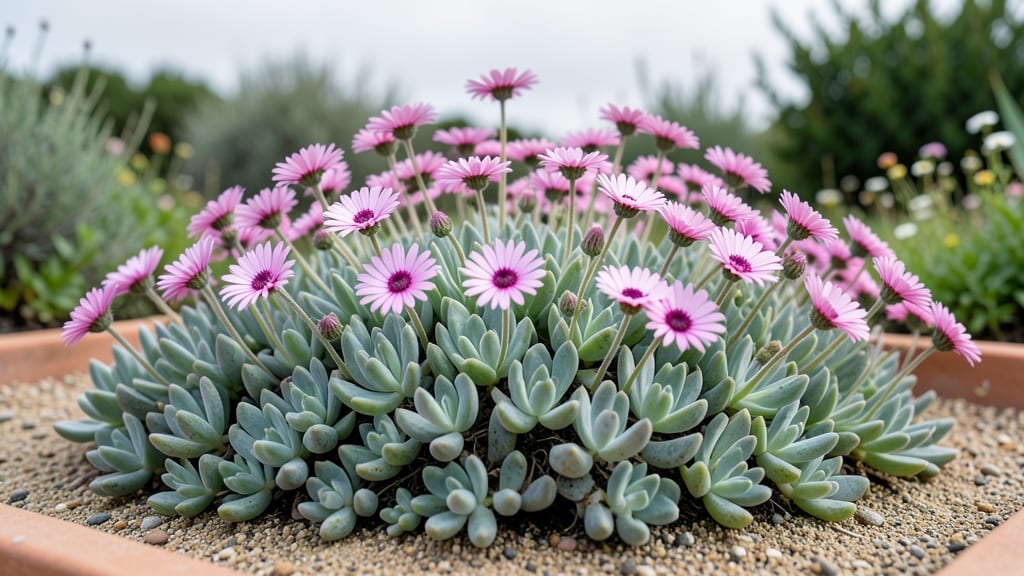
The ice plant bloom time is a stunning spectacle that unfolds when temperatures rise and sunlight peaks—typically from late spring to early fall, with June and July as their prime showtime 🌸.
If you’ve ever wondered why your ice plant (Delosperma or Lampranthus) suddenly bursts into vibrant color—only to fade just as quickly—you’re not alone.
These drought-resistant beauties bloom on a strict heat schedule, and understanding their ice plant bloom time can mean the difference between a stunning garden display and missed floral magic.
Different varieties have their own timing: some, like Delosperma cooperi, start blooming in May and stretch into September, while others peak later in the season. But here’s the secret: consistent sun and well-draining soil are the real game-changers for prolonging those bright blooms.
In this guide, I’ll break down when your ice plant will flower, how climate affects its schedule, and the simple care tricks to keep those petals popping all summer long.


Ice plant bloom time by variety: when & how long flowers last
Ice plants (Delosperma and Lampranthus species) are famous for their heat-triggered blooms, but their ice plant bloom time varies wildly by variety. Some burst into color in late spring, while others wait until summer’s peak heat—and a few even rebloom if conditions are just right.
Knowing your plant’s bloom cycle helps you plan for season-long color instead of fleeting flashes of flowers.
Most ice plants follow a summer bloom pattern, with peak flowering between June and August in warmer climates. However, cooler regions (USDA Zones 7–8) may see delayed blooms until July or August, while hotter zones (9–11) can enjoy earlier, longer-lasting displays.
The key? Heat exposure—these plants need consistent daytime temps above 75°F to trigger bud formation.
Here’s the breakdown of three standout varieties—Delosperma cooperi, Lampranthus spectabilis, and D. nubigenum—and their unique bloom windows, duration, and reblooming potential. Use this guide to time your plantings for maximum impact.
Delosperma cooperi—often called "Ice Plant"—is the most reliable rebloomer if you prune spent flowers and maintain dry, well-draining soil. Its magenta-pink blooms appear in late June, lasting 4–6 weeks, but with proper care, you can coax a second flush in late summer. The secret? Shearing back 1/3 of the plant right after the first bloom forces new growth and extends the season by 2–3 weeks.
Lampranthus spectabilis, with its showy daisy-like flowers, is a late-season star, blooming from July to September in hotter climates. Unlike Delosperma, it prefers consistent heat (avoid sudden cold snaps) and hates soggy soil. Its longer bloom duration (up to 8 weeks) makes it ideal for extended color, but deadheading faded blooms is critical to prevent seed production, which saps energy from new flowers.
Delosperma nubigenum is the wildcard—it blooms twice a year if conditions are right. The first wave hits in May or June, triggered by rising daytime temps, while the second comes in August or September after summer’s peak heat. Its smaller, clustered flowers are less showy but more prolific, making it perfect for ground cover where continuous blooms are desired. Mulch heavily in winter to protect roots and encourage reblooming the next season.
All three varieties thrive in full sun but struggle in humidity—morning watering (never overhead) and well-draining gritty soil (add perlite or sand) are non-negotiable. Overwatering is the #1 killer of ice plant blooms—drought stress actually triggers more flowers!
Aim for deep watering every 10–14 days in summer, then reduce to monthly in fall.
For longer-lasting blooms, try these pro tips:
- Prune aggressively after the first bloom to stimulate regrowth.
- Fertilize lightly in spring with a low-nitrogen formula (5-10-10).
- Plant in south-facing beds to maximize heat exposure.
- Avoid nighttime watering—wet foliage invites fungal diseases that weaken plants.
If your ice plant fails to bloom, check for these common culprits:
- Too much shade (needs 6+ hours of direct sun).
- Over-fertilizing (too much nitrogen = leafy growth, no flowers).
- Poor drainage (roots rot in soggy soil).
- Sudden cold snaps (delays bud formation).
With the right variety and care, your ice plant can bloom from spring to fall—turning your garden into a non-stop floral show with minimal effort.
Start by matching your climate to the right type, then prune and water strategically to lock in those vibrant blooms all season long. 🌸
Climate zones & heat requirements: how to extend ice plant bloom time
Ice plants (Delosperma and Lampranthus) thrive in heat, but their bloom time hinges on precise temperature and sunlight conditions. In USDA Zones 7–11, these drought-lovers need consistent warmth—typically 70–90°F—to trigger and sustain their vibrant displays.
Without proper heat exposure, blooms appear briefly before fading, leaving gardeners frustrated. The key? Understanding how your local climate affects their flowering cycle and adjusting care accordingly.
For example, in Zone 9–11, ice plants often bloom from late winter to early summer, while in cooler Zone 7, they may wait until mid-spring to show color.
Humidity also plays a role—high moisture can shorten bloom duration, while dry, arid conditions (like their native South Africa) keep flowers vibrant longer. Let’s break down how to optimize their environment for extended blooms.
🌡️ 5 Heat & Light Hacks to Extend Ice Plant Bloom Time
- 1
- 2
- 3
- 4
- 5
Soil composition also impacts bloom time. Ice plants despise soggy roots—amend heavy soil with sand or perlite to improve drainage. In Zone 7, where cooler nights slow growth, consider planting in a south-facing bed to capture extra heat.
For container growers, use terracotta pots, which dry faster and keep roots warm.
If your ice plants bloom briefly then fade, check for nutrient deficiencies. A quick soil test can reveal if they need phosphorus (P) for flowering.
In Zone 10–11, where heat persists year-round, provide light shade during peak afternoon sun (1–4 PM) to prevent leaf scorch, which weakens plants and shortens bloom cycles. A simple shade cloth (30–50%) can make a dramatic difference.
Finally, embrace patience. Some Delosperma varieties, like Delosperma cooperi, bloom annually in ideal conditions, while others, like Lampranthus spectabilis, may take 2 years to reach peak flowering. By aligning your care with their heat requirements, you’ll turn a 6-week bloom into a 3-month spectacle. 🌸