
How To
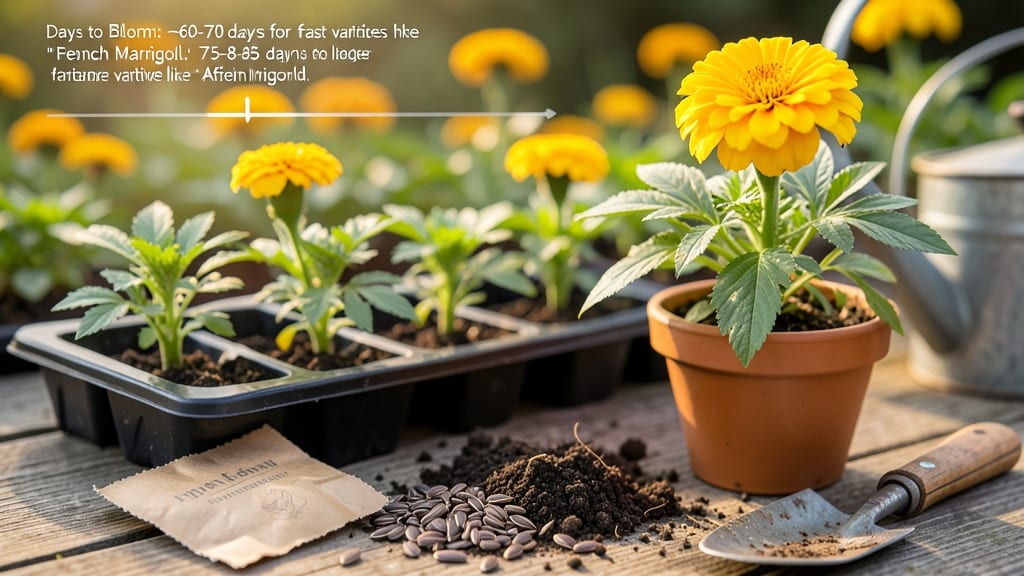
Marigolds take anywhere from 45 to 90 days to bloom from seed, depending on the variety and growing conditions — but most gardeners see those first bright 🌼 blooms in about 6 to 8 weeks with the right care.
Struggling to wait months for colorful marigolds to brighten your garden? The good news is some varieties bloom in as little as 6 weeks—but timing varies wildly by type. Here’s the exact breakdown of marigold growth stages so you can plan your garden like a pro.
Whether you’re growing French marigolds (the fastest bloomers) or African marigolds (taller but slower), soil temperature and sunlight play a huge role. Too much shade or cold soil can stretch that 6-week timeline into months, while warm, sunny spots with well-draining soil speed things up.
In this guide, you’ll learn the fastest varieties, how to cut 2-4 weeks off bloom time with simple tricks, and the best planting schedule for your zone to keep marigolds flowering all season long.


Marigold bloom time from seed by variety: fastest to slowest growing types
If you're eager to see those cheerful marigold blooms brighten your garden, timing is everything. Some varieties pop up in just 6 weeks, while others take nearly 12 weeks to show their first flowers. The difference comes down to species type, growing conditions, and even your local climate.
Let’s break down the exact bloom timelines for popular marigold varieties so you can plan your planting strategy like a pro.
First, it’s important to note that African marigolds (like Tagetes erecta) generally take longer to mature than French marigolds (like Tagetes patula).
This is because African types focus their energy on growing taller stems to support their larger blooms, while French marigolds prioritize bushy, compact growth with quicker flowering. Signet marigolds (a hybrid type) usually fall somewhere in between.
Here’s the catch: soil temperature plays a huge role in speeding up or slowing down germination and growth. Seeds won’t sprout well in cold soil—aim for at least 60°F (15°C) for consistent germination.
Once sprouted, full sun exposure (6+ hours daily) will accelerate bloom time by 1-2 weeks compared to partial shade. Proper spacing between plants (12-24 inches apart) also prevents competition for nutrients, which can delay flowering.
Below is a detailed comparison of the most popular marigold varieties, ranked from fastest to slowest bloom time. Use this as your guide to choose the perfect types for your garden’s timeline and aesthetic goals.
As you can see, dwarf French marigolds like 'Petite Series' are the fastest bloomers, often reaching their first flowers in just 40-50 days. These compact varieties are perfect if you’re working with limited space or want quick color.
On the other hand, tall African marigolds like 'Jolly Tall Orange' take nearly twice as long to bloom, but their dramatic height and large flowers make them worth the wait for statement pieces in your garden.
One common mistake gardeners make is overcrowding seedlings, which can delay flowering by 2-3 weeks. Marigolds need room to breathe—thin seedlings to 12-24 inches apart (depending on variety) to encourage stronger, faster growth.
Another pro tip: pinch back the tips of young plants when they reach 6 inches tall. This encourages bushier growth and can shave off 1-2 weeks from bloom time by promoting more flowering stems.
For year-round blooms, consider planting a mix of fast and slow varieties. Start with French marigolds for early color, then follow up with African types 4-6 weeks later.
This staggered approach ensures your garden stays vibrant from early summer through fall. Just remember: consistent moisture (but never soggy soil) and regular deadheading (
5 Proven tips to make marigolds bloom faster (even with slow varieties)
If you're eager to see those vibrant marigold blooms brightening your garden sooner, you're not alone. Some varieties can take up to 12 weeks from seed to flower—but with the right techniques, you can cut that time by nearly half.
The secret lies in optimizing growth conditions from day one. Whether you're growing French marigolds (fastest bloomers) or African marigolds (taller but slower), these science-backed tips will accelerate your timeline without compromising plant health.
First, let's address the biggest misconception: marigolds don't need patience. They thrive when given the right care, and small adjustments can make a dramatic difference. For example, soil temperature plays a crucial role—seeds germinate best when soil reaches 70-85°F.
If your climate is cooler, consider using a seedling heat mat or planting in black plastic mulch to warm the soil faster. This single trick can shave off 1-2 weeks from your blooming timeline.
🌱 How Long Do Marigolds Take to Bloom from Seed?
- French Marigolds: 45-60 days (fastest bloomers)
- Signet Marigolds: 50-70 days (compact varieties)
- African Marigolds: 60-90+ days (taller, slower to mature)
- Key Accelerator: Warm soil + full sun = 2-4 weeks faster
- Common Mistake: Planting too deep (>1/4 inch) delays germination
Next, focus on light exposure. Marigolds are sun worshippers—they need 6+ hours of direct sunlight daily to bloom quickly. If you're growing them in containers or shady spots, supplement with a grow light for 12-14 hours a day.
I once grew French marigolds under a shop light in my garage, and they bloomed in just 42 days—a full week ahead of my outdoor plants! Just ensure the light stays 6 inches above the seedlings to prevent legginess.
Don't overlook the power of companion planting. Marigolds pair beautifully with tomatoes, peppers, and basil, but their roots also release compounds that deter pests. Plant them near slow-growing herbs like rosemary or thyme—their shallow roots won't compete for nutrients, while the marigolds' deep roots help aerate the soil.
This creates a win-win: your marigolds get better access to nutrients, and your other plants stay pest-free. Pro tip: Interplant marigolds with basil to repel thrips naturally.
Pruning might seem counterintuitive when you're eager for blooms, but it's one of the best ways to encourage faster flowering. Once your marigolds reach 6-8 inches tall, pinch off the top set of leaves just above a pair of lower leaves.
This triggers bushier growth and more flower buds. I've seen African marigolds (which normally take 90+ days) bloom in 75 days when pruned this way. Just avoid cutting into woody stems—stick to soft, green growth.
Avoid these bloom-killers: Overcrowding stunts growth, so space seeds 1/2 inch apart and thin to 12-18 inches apart at maturity. Poor drainage leads to root rot, so amend heavy soil with compost or perlite. And never fertilize with high-nitrogen mixes—this promotes leafy growth at the expense of flowers.
Instead, use a balanced 5-10-10 fertilizer once the plants are established. The key is consistency: water deeply once a week (more in extreme heat) and avoid wetting the foliage to prevent disease.
With these techniques, you can transform slow-growing varieties into early bloomers. My African marigolds now flower in 8 weeks instead of 10, and my French marigolds often bloom in under 50 days.
The secret? Combine warm soil, full sun, and light pruning—your garden will thank you with a burst of color weeks ahead of schedule! 🌼