
Blooming
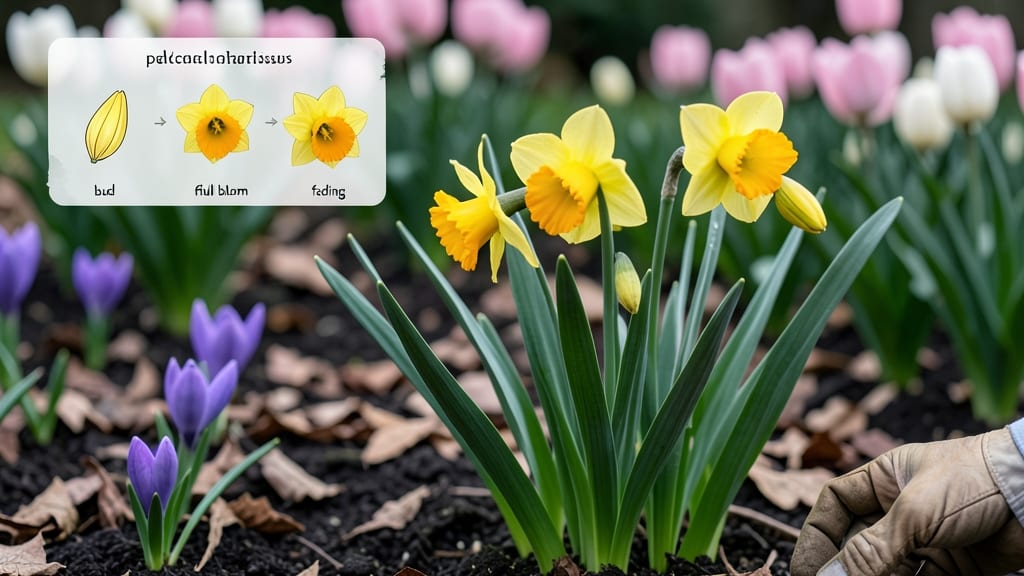
Daffodils last in bloom for 2 to 3 weeks on average, with trumpet varieties extending up to 4 weeks when grown in optimal conditions. Their flowering window shifts from late winter for early cultivars to early spring for late-season types, depending on your climate zone.
Understanding how long daffodils stay in bloom depends on both their variety and growing conditions. 🌼 Early bloomers like Jonquil typically peak in late winter (Zone 3–7), while late-season types such as Ice Follies extend their display into early spring (Zone 8–10).
The key to prolonging their show is consistent moisture—dry soil accelerates wilting, while proper mulching can add an extra week to their lifespan.
What many gardeners overlook is how temperature fluctuations impact bloom duration. Sudden cold snaps can shorten the flowering period, while steady daytime warmth (above 60°F) helps sustain vibrant blooms.
I’ve found that deadheading spent flowers immediately after they fade prevents energy loss and encourages a second flush in some varieties.
For those in colder climates (Zones 3–5), planting daffodils in well-draining soil with afternoon shade can extend their bloom by 5–7 days. In warmer zones (8–10), afternoon shade becomes even more critical to prevent premature wilting.
The secret lies in balancing sunlight exposure—too much heat stresses the flowers, while too little weakens their stems.
💡 In This Article
- Daffodil Bloom Duration by Variety and Growth Stages
- Extending Daffodil Bloom Life with Climate-Specific Care
Daffodil bloom duration by variety and growth stages
Daffodil blooms unfold through distinct growth stages that reveal why their duration varies so dramatically between varieties. The process begins with bud formation, which occurs 4–6 weeks before flowering when the plant stores energy in its bulb.
Early bloomers like Jonquil and Tête-à-Tête typically form buds in late fall, while late-season types such as Ice Follies wait until winter.
This timing difference explains why Jonquils burst into color as early as February in Zone 5, while Ice Follies may not peak until April in Zone 8. 🌱
The actual bloom duration hinges on two critical factors: temperature stability and daylight exposure. Trumpet daffodils (like 'Dutch Master') thrive in steady daytime temperatures between 60–75°F, which sustains their vibrant petals for up to 4 weeks.
In contrast, smaller varieties like Tête-à-Tête wilt faster (typically 2 weeks) because their delicate stems can't support heavy blooms in fluctuating temperatures.
What's fascinating is how daylight hours trigger the final bloom stage: longer spring days accelerate wilting in early bloomers, while shorter winter days help late-season types maintain their display.
Here's what happens behind the scenes: Each daffodil flower contains 6 stamens that produce nectar to attract pollinators. As the flower ages, these stamens wither first, followed by the petals. In trumpet varieties, the nectar production continues longer, which is why their blooms stay perky for weeks.
Smaller daffodils exhaust their energy faster because their compact structure can't sustain prolonged nectar production. This biological process is why you'll often see trumpet daffodils still standing tall while nearby smaller varieties have already dropped their petals.
Consider these variety-specific timelines for common types:
- Jonquil: 2–3 weeks of bloom (February–March in Zones 3–7)
- Ice Follies: 3–4 weeks (March–April in Zones 8–10)
- Tête-à-Tête: 2 weeks (February–March in all zones)
- Dutch Master (trumpet): 3–4 weeks (March–April in Zones 5–9)
The secret to longer blooms lies in the bulb's energy reserves. Larger bulbs like those of trumpet daffodils store more starch, which translates to extended flowering. Smaller bulbs (like those of Tête-à-Tête) have limited reserves, which is why their blooms are fleeting.
What most gardeners don't realize is that overwatering during bud formation can actually shorten bloom time by diluting the bulb's energy stores. The ideal moisture level is 1 inch of water per week during active growth, but never soggy soil.
For those who want to push their daffodils to bloom longer, focus on the post-bloom period. Once flowers fade, cutting the stems back to just above the bulb preserves the plant's energy for next year's blooms.
This simple technique can add 3–5 extra days to your daffodil display by preventing the plant from redirecting energy to seed production. The key is timing: remove faded blooms immediately, but leave the foliage until it yellows naturally—this ensures the bulb recharges properly for next season. 💐