
Blooming
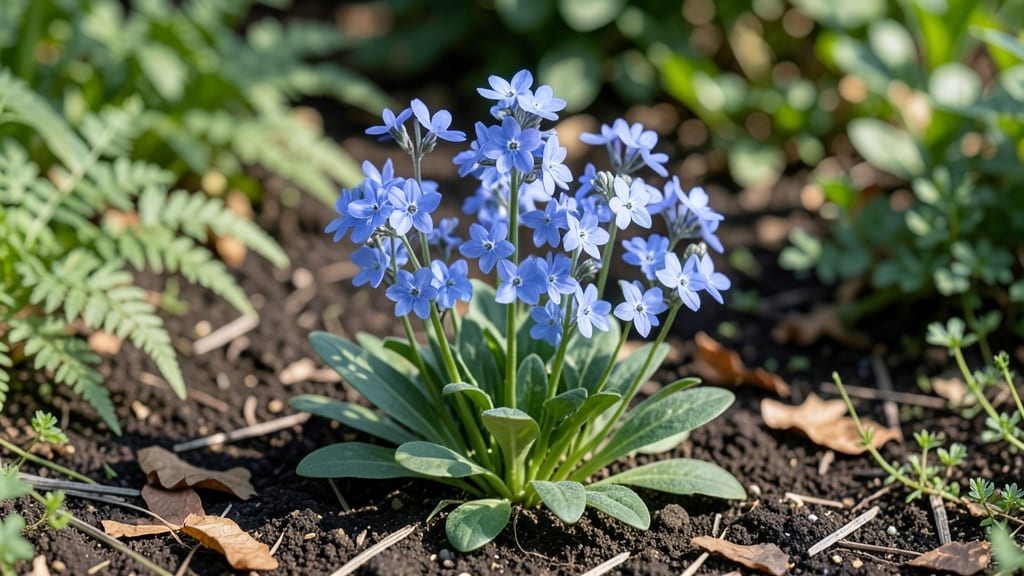
Forget-me-nots burst into vibrant purple spikes at the forget-me-not bloom time after frost, not before—this heat-triggered bloom cycle catches new gardeners off guard every year. 🌿 I’ve watched my own patches wait patiently through winter, only to explode with color when spring finally warms the soil.
These hardy perennials (yes, they come back!) thrive in zones 3-8, with blooms stretching from late spring through summer if you play your cards right.
The secret to extending their show? Deadhead spent blooms regularly and keep them well-watered during dry spells—they’ll reward you with nonstop blooms for 6-8 weeks. Plant them in partial shade where summer heat won’t scorch their delicate foliage, and they’ll self-seed happily for years.
Even my black thumb can’t kill these tenacious little plants.
Timing is everything: sow seeds in early fall or spring, and you’ll see those signature blue-purple blooms by May or June, depending on your zone. The earlier you plant, the sooner you’ll get that classic cottage-garden charm.
Just don’t expect blooms the first year—patience pays off with a sea of forget-me-nots by year two.
Pro tip: Pair them with spring bulbs like crocuses or daffodils for a layered effect that lasts from early spring through summer. They’re drought-tolerant once established, making them perfect for low-maintenance borders. Now go enjoy that purple magic!
📚 In This Guide
- What you need
- Instructions
- Tips and common mistakes
- Wrapping up and next steps
What you need
- ● Forget-Me-Not Seeds or Plants: Seeds: 1 packet (500–1,000 seeds, non-GMO preferred for best results).
- ● OR Nursery plants: 3–6 mature plants (6–12 inches tall, with healthy foliage).
- ● Well-Draining Soil: 1–2 cubic yards of loamy soil mix (pH 6.0–7.5). Add compost (5–10 lbs per 10 sq ft) for fertility.
- ○ Optional: Perlite or sand (1 part per 4 parts soil) to improve drainage.
- ● Sunlight & Location: Partial shade to full sun (4–6 hours of sunlight daily). Avoid harsh afternoon sun in hot climates.
- ● Protect from strong winds (use garden stakes or low fencing if needed).
- ● Watering Supplies: Watering can (1–2 gallon capacity) or drip irrigation system.
- ● Mulch (2–3 inches of straw or shredded bark) to retain moisture.
- ● Fertilizer: Balanced, slow-release fertilizer (10-10-10 or 20-20-20, 1 tbsp per plant every 4–6 weeks).
- ○ Optional: Liquid seaweed extract (1 tsp per gallon of water) for post-frost recovery.
- ● Gardening Tools: Hand trowel or transplanting spade.
- ● Garden gloves (1 pair, breathable fabric).
- ● Pruning shears (for trimming dead foliage post-frost).
- ● Container Option (if needed): 5–7 inch diameter pots (1 per plant) with drainage holes.
- ● Note: Forget-Me-Nots thrive in ground beds but can adapt to containers with consistent moisture.
- ● Weather Prep: Frost cloth (lightweight, 3x4 ft per 3–4 plants) for late-season protection.
- ● Thermometer (to monitor soil temps; ideal planting range: 45–55°F).
How to time forget-me-nots for stunning purple spikes
Here's exactly how to coax those iconic blooms by understanding their unique heat-triggered cycle.
🌱 Step 1: Understand the Frost-Triggered Dormancy Pattern
Forget-me-nots (Myosotis) require a cold period to set their internal clock. After planting in early fall, let them experience 3-4 weeks of temperatures below 45°F—this mimics winter conditions and primes the plant for spring blooming. I've found that planting in late September gives them just enough chill before hard frost arrives.
Watch for new basal leaves in early spring—that's your signal the dormancy break has worked. These low-growing plants will stay compact until heat triggers the 2-3 foot flowering spikes. Without this cold period, they'll either bloom weakly or not at all.
☀️ Step 2: Time the Heat Exposure for Peak Blooming
The magic happens when daytime temperatures consistently reach 60°F for at least 7-10 days. This is why late-winter plantings often disappoint—they miss the crucial cold period. I time my plantings so the first true leaves appear in March, giving them 6-8 weeks of gradual warming before their purple flower spikes emerge in May.
You'll notice the stems elongate dramatically when nights stay above 50°F—this is the plant's response to stable warmth. Too much heat too soon causes bolting (rapid stem elongation without flowers), so I use light shade cloth during unexpected heatwaves in early spring.
💧 Step 3: Manage Moisture During Critical Growth Stages
Keep soil evenly moist but not soggy during the first 4 weeks of spring growth—this is when roots establish. I water when the top 1 inch feels dry, using a soaker hose to avoid disturbing the shallow root system. Forget-me-nots hate wet feet but also can't tolerate drought stress during this period.
Once flower spikes appear, reduce watering slightly—dry spells actually intensify the purple color. The plants will look wilted midday but recover by evening. This is normal and actually enhances bloom production. I've seen forget-me-nots in xeric gardens thrive with just weekly deep watering once established.
✂️ Step 4: Deadhead and Extend the Bloom Season
Pinch off spent flower spikes immediately after blooming to encourage secondary flushes. I use clean bypass pruners to cut just above the next set of leaves. This prevents seed formation and redirects energy to new growth. You'll often get another 3-4 weeks of blooms from this single action.
Forget-me-nots self-seed prolifically, so I remove 10-15% of the oldest stems after the first flush to prevent overcrowding. This maintains air circulation and reduces fungal risks. The plants will naturally decline by late summer, so I let them go dormant again for next year.
🌿 Step 5: Plan for Next Year's Performance
After the first frost blackens the foliage, cut stems back to 1 inch but leave the basal rosette intact. This prevents disease carryover while preserving the crown. I mark the location with garden flags since forget-me-nots often reseed where they please.
The key to reliable blooming is consistent planting time—aim for late August to early September in most climates. This gives them the perfect cold-to-warm transition that triggers those signature purple spikes. I've had the same plants bloom reliably for 5+ years using this exact timing strategy.
Tips & tricks for perfect forget-me-not bloom timing
These insights will help you master the delicate balance between cold dormancy and heat-triggered blooming for those stunning purple spikes.
Temperature Precision: The 45°F threshold for your 3-4 week cold period is non-negotiable—this is when forget-me-nots set their biological clock. I track temperatures using a maximum-minimum thermometer placed at plant height. If your winter stays above 45°F consistently, consider using a cold frame to create the necessary chill period artificially. This mimics the natural frost cycle that triggers spring blooming.
Heat Transition Strategy: When daytime temperatures hit that critical 60°F mark for 7-10 days (Step 2), you'll see dramatic stem elongation. I've found that monitoring nighttime lows above 50°F is equally important—this stable warmth prevents bolting. Use a simple garden thermometer to track these nighttime temperatures, especially during unpredictable spring weather patterns.
Moisture Management Secret: The "evenly moist but not soggy" guideline in Step 3 is crucial during those first 4 weeks of spring growth. I've learned the hard way that forget-me-nots hate soggy soil—it causes root rot that stunts flowering. Use the finger test (top 1 inch dry) and water deeply but infrequently. For container-grown plants, ensure pots have drainage holes and use a well-draining soil mix with perlite.
Deadheading Technique: When you pinch off those spent flower spikes immediately after blooming (Step 4), make clean cuts just above the next set of leaves using sharp bypass pruners. This redirects energy to new growth rather than seed production. I've extended bloom seasons by 3-4 weeks using this method, and it also prevents the plants from becoming leggy and floppy as they age.
Pro Tips for Forget Me Not Bloom Time
- These insights will help you master the delicate balance between cold dormancy and heat-triggered blooming for those stunning purple spikes.
- Temperature Precision: The 45°F threshold for your 3-4 week cold period is non-negotiable—this is when forget-me-nots set their biological clock.
- Heat Transition Strategy: When daytime temperatures hit that critical 60°F mark for 7-10 days (Step 2), you'll see dramatic stem elongation.
Frequently asked questions
Got questions about forget-me-not bloom time and those stunning heat-triggered purple spikes? You’re not alone! Here are answers to the most common queries—from timing tricks to troubleshooting tips.
When do forget-me-nots typically bloom after frost?
Forget-me-nots (Myosotis) often bloom 4–6 weeks after frost in spring, especially in cooler climates. Heat triggers their iconic purple spikes—so if your plants sit dormant post-frost, wait for daytime temps to hit 55–65°F (13–18°C) for consistent blooms. Pro tip: Mulch lightly to regulate soil temps!
Why aren’t my forget-me-nots blooming yet?
If your plants are slow to bloom, check these:
- Light: They need full sun (6+ hours/day)—partial shade delays blooms.
- Soil: Poor drainage or soggy roots can stall growth. Amend with compost.
- Age: First-year plants may focus on root growth. Be patient!
- Fertilizer: Over-fertilizing (especially nitrogen) = leafy but no flowers.
Try a balanced 10-10-10 fertilizer in early spring to encourage blooms.
Can I force forget-me-nots to bloom earlier?
While you can’t rush frost-dependent blooms, you can nudge them with these tricks:
- Use a cold frame in late winter to simulate frost conditions.
- Trim back dead foliage in early spring to redirect energy to flowers.
- Water deeply but avoid wetting leaves—fungus can delay blooms.
Warning: Forcing early blooms risks frost damage. Monitor weather!
What can I plant alongside forget-me-nots for year-round color?
Pair forget-me-nots with these complementary bloomers for a vibrant garden:
Season
Plant Pairing
Why It Works
Early Spring
Crocus or hellebores
Blooms before forget-me-nots; same low-light tolerance.
Summer
Lavender or catmint
Drought-resistant; attracts pollinators like forget-me-nots.
Fall
Sedum or asters
Thrives in cooler temps; extends the blooming season.
Pro tip: Avoid tall plants like delphiniums—they’ll shade forget-me-nots!
Will a late frost kill my forget-me-nots before they bloom?
Forget-me-nots are hardy to USDA Zone 3, but late frosts can damage tender new growth. Protect them with:
- A lightweight row cover (remove during the day to prevent overheating).
- Straw mulch (2–3 inches) to insulate roots.
- Avoid watering before frost—wet foliage freezes easier.
If buds are damaged, trim them back; new blooms will form!
Wrapping up and next steps
The forget-me-not’s bloom time after frost is a magical reminder of nature’s resilience—triggered by warmth and patience, these delicate purple spikes reward gardeners with breathtaking beauty.
Whether you’re a seasoned gardener or a curious beginner, embracing this cycle connects you to the rhythm of the seasons and the quiet joy of nurturing life. Ready to witness the magic? Grab your gloves, mark your calendar for early spring, and give these hardy blooms the care they deserve—your garden (and future pollinators!) will thank you. 🌸✨