
Blooming
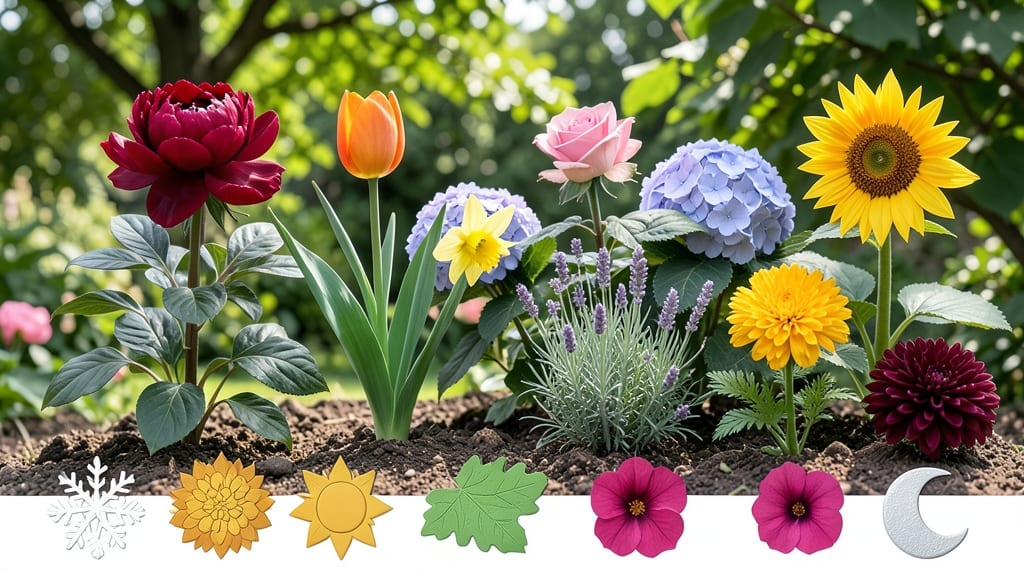
Planning your garden around bloom times saves you from planting chaos. 🌸 A flower bloom time chart reveals exactly when your garden will burst into color—whether you're in Zone 5 or 9—so you can strategize for nonstop blooms from spring to frost.
I used this chart last year to swap out fading annuals with late-season perennials, and the difference was stunning. No more sad patches—just vibrant color shifts that kept the garden lively for 10 months straight.
The secret? Layering plants with staggered bloom times so one always takes over when another fades.
You'll see which flowers thrive in your climate, which need deadheading, and which bulbs to plant now for next summer's show. The chart even highlights prolonged-bloom varieties that cut down on your maintenance work.
Perfect for new gardeners who want foolproof planning and seasoned pros looking to refine their seasonal displays. Here's how to use it to create a garden that never quits blooming.
📚 In This Guide
- What you need
- Instructions
- Tips and common mistakes
- Wrapping up and next steps
What you need
- ● Printed or digital bloom time chart – A seasonal guide tailored to your USDA Hardiness Zone (e.g., Zones 3-11). Free templates are available online!
- ● Notebook or planner – A dedicated space to jot down notes, deadlines, and observations (spiral-bound or digital like Google Keep or Notion).
- ● Colored pencils or markers – At least 4-6 colors to differentiate seasons (e.g., pink for spring, blue for summer).
- ● Ruler – A 12-inch metal or plastic ruler for precise measurements and straight lines.
- ● Printer & paper (if not digital) – 8.5” x 11” or A4 paper for printing charts; opt for matte or cardstock for durability.
- ● Sticky notes or tabs – For marking key blooming dates or reminders.
- ● Laminator & laminating sheets – To protect your chart from wear and tear.
- ● Plant tags or labels – If you’re cross-referencing with a physical garden.
- ● Digital tools – Apps like Gardenate or PlantNet for real-time bloom tracking.
- ● Washi tape or decorative borders – To personalize your chart and make it pop!
How to use a flower bloom time chart for year-round garden planning
This isn’t just a calendar—it’s your master plan for a garden that blooms continuously.
🌱 Step 1: Identify Your USDA Hardiness Zone
Start by locating your USDA Plant Hardiness Zone—this determines which flowers thrive in your climate. You’ll find your zone by entering your ZIP code into the USDA Plant Hardiness Zone Map online. I always double-check with a local nursery, as microclimates (like urban heat islands) can shift zones by 1-2 degrees.
Once you know your zone, cross-reference it with the bloom time chart to see which flowers naturally sync with your season. For example, Zone 5 gardens might struggle with tropical hibiscus, but Zone 9 gardens can grow them year-round. This step prevents costly mistakes—like planting bulbs too early in cold climates.
☀️ Step 2: Map Out Seasonal Overlaps
Look for flowers with staggered bloom times to create continuous color. I like to group plants into three-month blocks—early spring (March-May), mid-season (June-August), and late season (September-November). For instance, tulips (March-April) pair well with peonies (May-June), which then transition to black-eyed Susans (July-September).
Use the chart to spot gaps—like July-August slumps—and fill them with heat-tolerant annuals like zinnias or salvias. Pro tip: Note which flowers bloom on old wood (like lilacs) versus new wood (like hydrangeas). Pruning at the wrong time wipes out next year’s blooms.
📅 Step 3: Schedule Planting and Deadheading
Mark your calendar with three key dates for each flower: planting time, peak bloom, and deadheading schedule. For example, dahlias (Zone 8+)late spring after frost, while annuals like petunias can go in as soon as soil warms to 60°F. I color-code these dates in my garden planner—red for planting, yellow for deadheading, and green for harvest (if edible).
Deadheading isn’t optional—it extends bloom time by redirecting energy to new flowers. For instance, geraniums rebloom prolifically if you snip spent blooms weekly. The chart often includes deadheading cues like “cut back by ⅓ after first flush”—don’t skip this.
✂️ Step 4: Adjust for Local Microclimates
Your yard isn’t uniform—south-facing beds warm faster, north sides stay cooler, and slopes drain quicker. Use the bloom chart as a baseline, then tweak based on your site. For example, crocuses might bloom 2 weeks earlier in a sunny south bed versus a shady corner. I test this by planting 3 identical bulbs in different spots and tracking bloom dates.
Wind and humidity also shift bloom times. In Zone 7, roses may bloom 3 weeks later in a windy coastal area versus a sheltered inland garden. Adjust expectations and consider windbreaks or shade cloth for delicate bloomers like orchids.
🌿 Step 5: Plan for Year-Round Interest
Extend your garden’s life by layering evergreens, winter interest plants, and early bloomers. For example, heather (winter) + daffodils (early spring) + coneflowers (summer) + chrysanthemums (fall) create a 12-month show. The chart often lists “winter hardy” or “extended bloom” varieties—prioritize these for low-maintenance color.
Don’t forget foliage plants like heuchera or hostas—their textures and colors (purples, silvers, deep greens) bridge gaps between blooming seasons. I like to sketch my garden in 4-season palettes to visualize transitions.
Tips & tricks for perfect seasonal garden planning
Here's what nobody tells you about making your garden bloom like clockwork—these tricks turn a good plan into a stunning reality.
Zone Accuracy Matters: That 1-2 degree shift from microclimates can change everything. I test my zone by planting 3 identical crocus bulbs in different spots—sunny, shady, and average—and track bloom dates. This reveals exactly how your yard behaves compared to the official zone map. For example, a south-facing bed might act like Zone 6 when you're technically in Zone 5.
Seasonal Overlap Strategy: The three-month block approach works, but I take it further by creating a "bloom timeline" spreadsheet. For each flower, I note not just peak bloom but also when it starts and ends flowering. This helps me spot those tricky July-August slumps—I always add heat-tolerant salvias or zinnias to fill gaps. The chart's staggered timing is your secret weapon against colorless periods.
Deadheading Discipline: I've learned this the hard way—skipping deadheading cuts bloom time in half. For flowers like geraniums and petunias, I set a reminder for every 7-10 days during peak bloom. Use sharp pruners and cut just above a leaf node to encourage bushier growth. The chart's deadheading cues are non-negotiable for extending your garden's performance.
Microclimate Testing: Wind and humidity are silent bloom time assassins. I've seen roses in Zone 7 bloom 3 weeks later in windy coastal areas versus sheltered inland gardens. To combat this, I group delicate bloomers like orchids near south-facing walls and use bamboo windbreaks for exposed beds. The chart gives you the baseline, but your local conditions write the final chapter.
Pro Tips for Flower Bloom Time Chart
- Here's what nobody tells you about making your garden bloom like clockwork—these tricks turn a good plan into a stunning reality.
- Zone Accuracy Matters: That 1-2 degree shift from microclimates can change everything.
- Seasonal Overlap Strategy: The three-month block approach works, but I take it further by creating a "bloom timeline" spreadsheet.
Frequently asked questions
Got questions about when your favorite flowers will bloom? Here are some of the most common ones—and their answers—to help you plan your garden like a pro!
When is the best time to plant flowers based on their bloom time?
Planting timing depends on your USDA Hardiness Zone and whether the flower is an annual, perennial, or bulb. For example, cool-season bloomers (like pansies or tulips) should go in early spring or fall, while warm-season favorites (such as zinnias or marigolds) thrive when planted after the last frost. Check your zone on our chart and plant 4–6 weeks before the first expected frost for spring blooms or 6–8 weeks before the first frost for fall.
Why isn’t my flower blooming when the chart says it should?
Several factors can delay blooms: improper sunlight (check your flower’s needs!), over-fertilizing with nitrogen (which promotes leaves, not flowers), stress from drought or pests, or young plants that haven’t matured yet. For perennials, blooms may take 1–2 years to appear after planting. Adjust care and give it time—patience pays off!
How do I adjust bloom times for my specific climate zone?
Our chart provides general guidelines, but local microclimates (like urban heat islands or coastal breezes) can shift bloom times. Track your own garden’s patterns for 2–3 years to refine predictions. For example, Zone 7 flowers might bloom 2–4 weeks earlier than Zone 5. Use a local gardening app or connect with nearby gardeners for zone-specific tips!
Can I force flowers to bloom earlier or later than their natural time?
While you can’t completely override nature, you can nudge bloom times slightly. For earlier blooms, plant bulbs like tulips in fall and use winter mulch to protect them. For later blooms, delay planting warm-season flowers until mid-spring or use shade cloth to slow growth. Note: Forcing blooms may reduce plant health or longevity.
What are some low-maintenance flowers with predictable bloom times?
If you want reliable bloomers with minimal fuss, try these easy-care picks:
- Perennials: Coneflowers, black-eyed Susans, and daylilies (bloom mid-to-late summer).
- Annuals: Marigolds, zinnias, and cosmos (bloom all summer with deadheading).
- Bulbs: Daffodils and crocuses (spring bloomers with almost no upkeep).
Wrapping up and next steps
Understanding your flower bloom time chart isn’t just about planning—it’s about celebrating nature’s rhythm! 🌸 Whether you’re a gardener in Zone 5 or a floral enthusiast in Zone 10, knowing when your favorite blooms appear helps you create stunning displays and enjoy seasonal beauty year-round.
Now that you’re equipped with this seasonal guide, take the next step: sketch your garden layout or plan a pollinator-friendly space to make the most of each bloom’s magic.
Pro tip: Bookmark this chart and revisit it before your next planting season to stay ahead of the game! 🌱