
Blooming
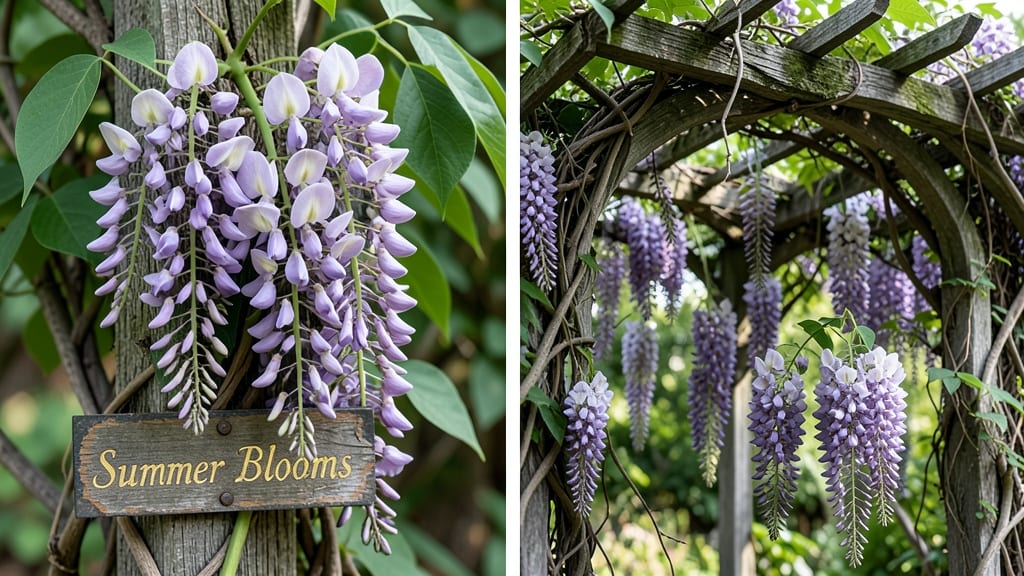
Wisteria does not bloom all summer—most varieties produce a single, abundant spring bloom, though some rebloom lightly in late summer with proper pruning and care. Timing depends on species and growing conditions.
Most wisteria varieties focus their energy on a spectacular spring display because the plant prioritizes seed production after flowering. 🌸 This means your wisteria might look bare for months unless you're growing a reblooming cultivar like 'Amethyst Falls,' which needs strategic pruning to encourage late-season flowers.
The key is understanding your specific variety's growth habits—some, like Wisteria floribunda, are more likely to rebloom than others.
Climate plays a huge role too. Cooler regions often see wisteria bloom earlier in spring, while warmer zones might experience a delayed but prolonged blooming window. If you're in a mild winter area, your wisteria could even surprise you with sporadic blooms throughout summer, though they'll never match spring's abundance.
The secret to extending the show? Prune after blooming to remove spent flowers and shape the plant—this redirects energy toward potential late-season growth.
💡 In This Article
- Wisteria Bloom Cycles: Why Most Varieties Flower Once
- Encouraging Reblooms: Pruning and Care for Extended Wisteria Flowers
Wisteria bloom cycles: why most varieties flower once
Wisteria's single spring bloom is a survival strategy rooted in its botanical priorities. After the dramatic floral display, the plant shifts its energy from reproduction to seed production—a process that demands significant resources.
This hormonal shift, triggered by ethylene gas released after flowering, signals the plant to prioritize seed development over additional blooms. 🌿 The result? Most varieties, like the classic Wisteria sinensis, produce their show-stopping cascades in 4-6 weeks during spring, then enter a dormant-like state until next year.
The two primary species—Wisteria sinensis (Chinese wisteria) and Wisteria floribunda (Japanese wisteria)—follow this pattern but with subtle differences. W. sinensis typically blooms slightly earlier (March-April in most climates) and produces 2-3 inch flowers on last year's wood, while W. floribunda blooms later (April-May) with longer 4-6 inch flower clusters.
Both species allocate up to 70% of their energy to seed pods after flowering, leaving little for additional blooms.
Climate zones dramatically influence bloom timing and duration. In USDA Zones 5-7, wisteria often blooms for 3-4 weeks in spring, while warmer Zones 8-10 may experience a 2-week window with occasional sporadic blooms later in the season.
The cooler nights of spring trigger the flowering process, while summer heat signals the plant to conserve energy for seed maturation. This explains why you might see wisteria in coastal areas (like Southern California) bloom later but more sporadically throughout summer.
What most gardeners don't realize is that wisteria's single bloom cycle is genetically hardwired. The plant's growth habit—producing flowers on second-year wood—means it can't rebloom like annuals or some shrubs.
Each flower cluster forms from buds that developed the previous summer, leaving no energy reserves for additional blooms unless you intervene with strategic pruning.
This is why varieties like 'Amethyst Falls' (a W. floribunda) can produce light late-summer blooms—they've been selectively bred to store more energy in their stems.
The exception to this rule lies in the plant's root system. Wisteria can produce new shoots from its roots, and these may occasionally bloom if given enough sunlight and nutrients. However, these root sprouts typically produce smaller, less abundant flowers compared to the main plant's spring display.
This is why gardeners often see wisteria "rebloom" in late summer—it's actually new growth from roots rather than the original plant's second flowering cycle.