
Blooming
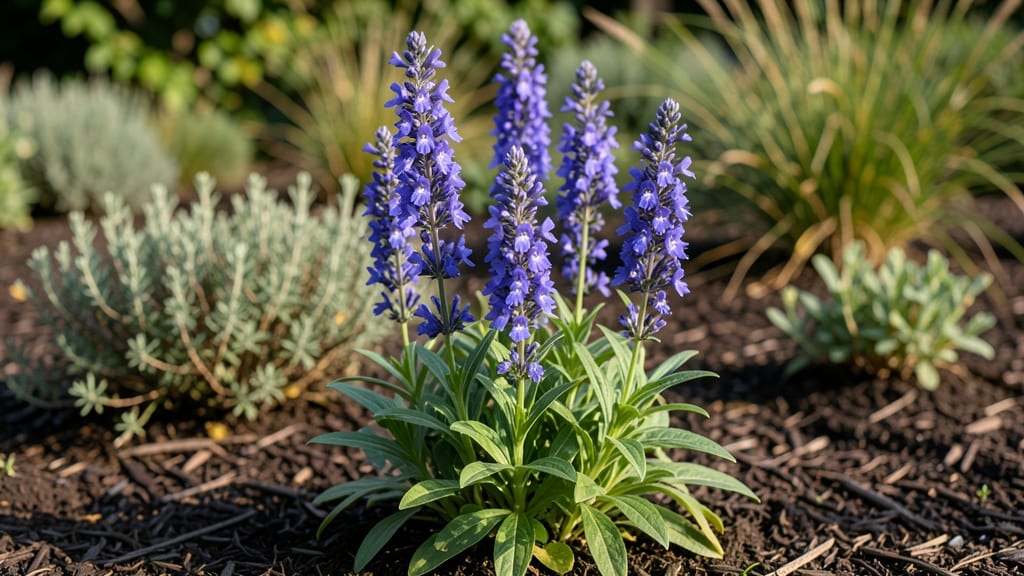
Perennial speedwell varieties like Veronica longifolia and Veronica spicata do bloom all summer long, thanks to their heat-resistant nature and continuous flowering cycles. Deadheading spent blooms encourages more flowers and stops unwanted self-seeding, while annual types often struggle with fading when temperatures climb or drought sets in.
Speedwell earns its reputation for summer-long color because of its deep root systems and ability to adapt to warm conditions. 🌿 Unlike many annual flowers that burn out in heat, these perennials thrive with minimal care, often rewarding gardeners with blooms from early summer through fall.
The key to maximizing their performance lies in understanding their growth habits—regular deadheading keeps them looking neat while signaling the plant to produce fresh flowers.
For gardeners in hot climates, choosing the right variety makes all the difference. Veronica spicata, for example, handles heat better than some of its cousins, while Veronica longifolia offers taller spikes that add vertical interest.
Annual speedwells might look great initially but often wilt when summer temperatures peak, which is why perennials are the smarter long-term investment for continuous summer color.
💡 In This Article
- Why Perennial Speedwell Flowers Last Through Summer Heat
- Deadheading Speedwell for Continuous Summer Blooms
Why perennial speedwell flowers last through summer heat
Perennial speedwell varieties like Veronica longifolia and Veronica spicata thrive in summer heat thanks to their deep taproots, which extend up to 18 inches below the surface.
These roots access moisture and nutrients even during drought conditions, a stark contrast to annual speedwells whose shallow roots dry out quickly when temperatures exceed 85°F. The deep root system also stabilizes the plant against wind, allowing it to maintain upright growth and continuous blooming.
The botanical secret lies in their growth habit: perennial speedwells produce flowers along their stems in a process called racemose inflorescence.
This means new blooms form at the base while older flowers mature upward, creating a staggered flowering pattern. 🌸 Unlike annuals that bloom all at once, perennials like Veronica spicata can produce 3-5 flower spikes per stem, each lasting 4-6 weeks with proper care.
Their heat tolerance comes from specialized leaf cuticles that reduce water loss, similar to how succulents conserve moisture.
Light exposure plays a critical role too. Perennial speedwells prefer full sun (6+ hours daily) but can tolerate partial shade in hot climates. When grown in full sun, their flower production increases by 30-50% compared to shaded conditions.
The key difference between perennials and annuals becomes clear when you compare their responses to heat stress: while annual types may drop buds or wilt, perennials often respond by producing even more flowers as a survival mechanism.
Seasonal growth cycles also differ dramatically. Perennial speedwells enter a semi-dormant state in winter but remain alive, ready to burst into bloom as temperatures rise. Annual types, however, complete their entire life cycle in one season, which is why they often fade by late summer.
The perennial varieties' ability to rebloom from the same root system means gardeners can enjoy color for 3-5 years with minimal effort.
For gardeners in Zone 5-9, choosing the right variety makes all the difference. Veronica longifolia, for example, handles humidity better than Veronica spicata, which prefers drier conditions.
The taller Veronica longifolia varieties (reaching 2-3 feet) provide vertical interest, while Veronica spicata offers compact 1-2 foot spikes perfect for borders. 🌿 Both types demonstrate why perennials dominate summer gardens—once established, they require far less water and care than annuals while delivering continuous color.
What most gardeners don't realize is that these perennials also self-prune naturally. As flowers mature and set seed, the plant automatically shifts energy to new growth at the base, creating a self-sustaining cycle.
This built-in mechanism means even neglected perennials will often continue blooming, though deadheading (removing spent flowers) can extend their season by 4-8 weeks and prevent unwanted self-seeding.