
Blooming
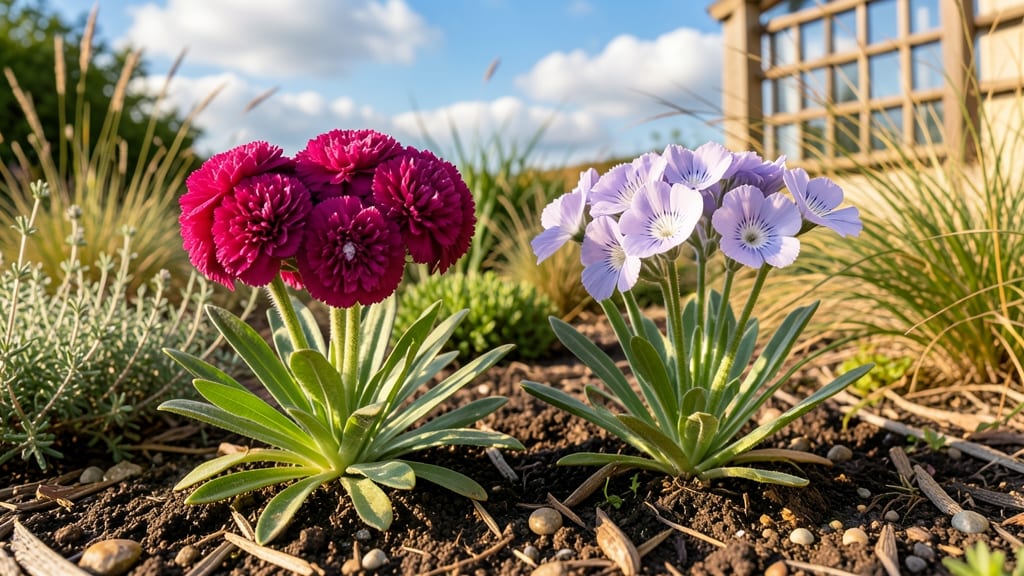
Dianthus varieties bloom throughout all summer differently: hardy perennials like ‘Firewitch’ and ‘Sweet William’ maintain vibrant blooms with regular care, while heat-sensitive annuals may wilt without consistent moisture and afternoon shade. Removing spent flowers encourages continuous flowering.
Do dianthus bloom all summer? Not all varieties handle summer heat the same way. 🌿 Perennial types develop deeper root systems that access moisture better, while annuals often struggle when temperatures exceed 85°F without proper hydration. I’ve seen ‘Firewitch’ dianthus thrive in full sun all summer long when mulched properly, while tender varieties like ‘Rainbow’ need afternoon shade to prevent leaf scorch. The key is matching your climate to the right cultivar—some even rebloom if you deadhead consistently.
For maximum summer blooms, I recommend watering at the soil level rather than overhead to prevent fungal issues. A 2-inch mulch layer helps retain moisture and keeps roots cool, while pruning back leggy stems encourages bushier growth.
Annual dianthus may need staking to support heavy flower heads, especially in humid conditions where they’re more prone to mildew.
💡 In This Article
- Heat Tolerance Factors in Dianthus Flowering Seasons
- Summer Care Tips to Prolong Dianthus Blooms
Heat tolerance factors in dianthus flowering seasons
The ability of dianthus to bloom all summer depends heavily on its root structure and leaf composition. Perennial varieties like ‘Firewitch’ develop deep taproots that reach moisture up to 18 inches below the surface, while annuals have shallower fibrous roots that dry out faster in heat.
This root difference explains why perennials handle summer droughts better—their deeper roots access water stored in lower soil layers where temperatures stay cooler.
Leaf structure also plays a critical role.
Heat-tolerant varieties have thicker, waxy leaves that reduce water loss through transpiration, while tender annuals often have thinner foliage that burns at temperatures above 90°F. 🌡️ The gray-green foliage of ‘Sweet William’ contains a natural wax coating that reflects sunlight, keeping leaves cooler than the bright green varieties that struggle in intense midday sun.
This leaf adaptation allows heat-resistant dianthus to photosynthesize efficiently even when air temperatures spike.
Flowering cycles are directly tied to temperature thresholds. Most dianthus varieties enter a semi-dormant state when daytime temperatures exceed 95°F, causing buds to abort or flowers to wilt within 24 hours of exposure.
However, heat-acclimated plants (those gradually exposed to rising temperatures) can maintain blooms through summer if nighttime temperatures stay above 60°F. This is why gardeners in Zone 8-9 often see continuous blooms from late spring through early fall.
Sunlight intensity creates another critical factor. While dianthus loves full sun, the angle of summer sunlight (more direct and intense) can stress plants. Varieties like ‘Rainbow’ may show leaf scorch—yellowing between leaf veins—when exposed to 6+ hours of direct afternoon sun during peak summer.
This occurs because the chlorophyll breaks down faster under high UV exposure, which is why providing 30% afternoon shade (via sheer curtains or nearby trees) can extend blooming by 3-4 weeks.
Dianthus also exhibits photoperiod sensitivity—day length influences flowering. Most varieties bloom continuously when day lengths exceed 14 hours, which occurs during summer solstice.
However, in northern climates where days shorten by late July, some varieties may naturally taper off unless you provide supplemental lighting or choose late-summer blooming cultivars like ‘Matrona’ that thrive in shorter days.
Consider these variety-specific heat tolerances when planning your garden:
- Heat-tolerant perennials: ‘Firewitch’ (up to 100°F with proper care), ‘Sweet William’ (thrives in 85-95°F ranges)
- Moderate tolerance: ‘Rainbow’ (needs afternoon shade above 90°F), ‘Giant White’ (best in 75-85°F)
- Heat-sensitive annuals: ‘Carnation’ types (struggle above 85°F without shade)
The science behind this involves a balance of transpiration rates and root zone temperatures. When soil temperatures exceed 80°F, root activity slows, reducing water and nutrient uptake—this is why mulching with 2-3 inches of straw can keep root zones 10°F cooler than surface temperatures. 💧