
Blooming
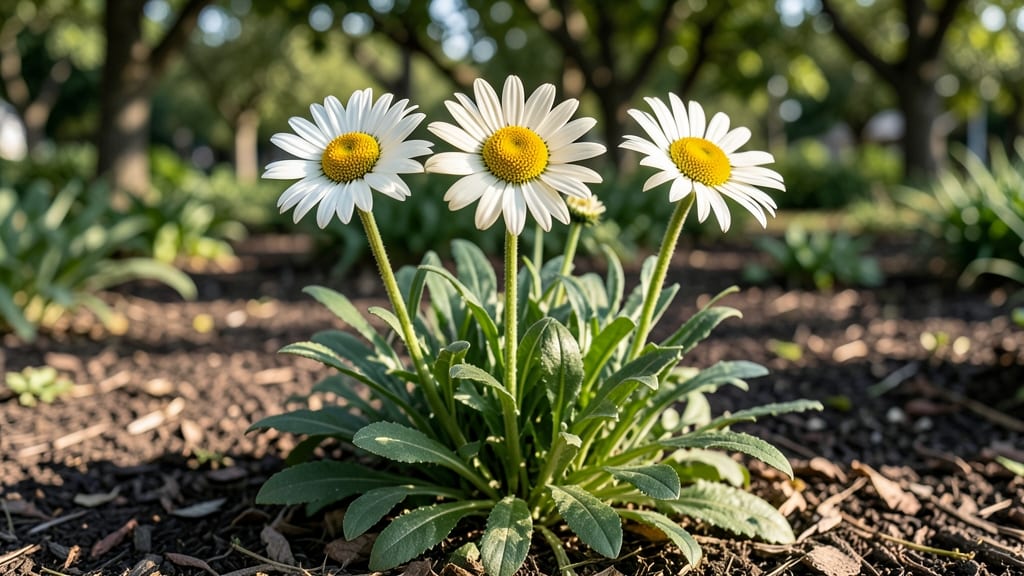
Shasta daisies typically do not bloom the first year, focusing instead on establishing strong roots and foliage. Most varieties require 12-18 months to mature and produce flowers, though some early-blooming types may show buds by late summer if planted early in warm zones (6-9).
Most gardeners learn this the hard way—planting Shasta daisies with high hopes only to see lush green leaves but no flowers. 🌱 The reason is simple: these perennials prioritize root growth in their first year, storing energy for future blooms.
Early-blooming varieties like 'Becky' or 'Alaska' might surprise you with a few buds if planted in mild climates (zones 7-9), but even then, expect only minimal flowering. Patience pays off—by year two, your plants will reward you with those iconic white-and-yellow blooms.
For faster results, try planting in early spring rather than fall. This gives roots more time to establish before winter dormancy, potentially nudging some varieties to produce a few flowers by late summer. Just remember: the bigger the bloom, the longer the wait—Shasta daisies are marathon runners, not sprinters!
💡 In This Article
- Why Shasta Daisies Skip Blooming Their First Year
- Best Shasta Daisy Varieties for Early Blooming
Why Shasta daisies skip blooming their first year
Shasta daisies follow a biological strategy called monocarpic growth, where they prioritize root and foliage development over flowering in their first year. This is similar to how many perennials like peonies or hostas focus on building underground reserves before producing blooms.
The plant allocates 60-70% of its energy to root expansion during this period, creating a robust network that can reach 12-18 inches deep by autumn. This deep root system helps them survive drought and compete with weeds.
The timing of planting dramatically affects this process. When planted in early spring (March-April), Shasta daisies have 4-6 months of active growth before winter dormancy, allowing roots to establish before cold sets in.
Fall planting (September-October) gives only 2-3 months of growth before winter, delaying root development by 6-12 months. In cooler climates (zones 3-6), the dormant period extends to 5-6 months, further slowing first-year progress. 🌱
Environmental factors like soil quality and sunlight also play crucial roles. Shasta daisies thrive in full sun (6-8 hours daily) and well-draining soil with a pH of 6.0-7.0. Poor soil conditions force the plant to divert even more energy to nutrient acquisition rather than flowering.
For example, clay-heavy soils can reduce root growth by 30% compared to loamy soils, delaying blooms by an additional year. The plant's natural dormancy period in winter further extends this timeline.
What most gardeners don't realize is that even when buds form in the first year, they're often aborted by the plant's internal hormonal balance. The primary hormone at play is gibberellin, which promotes flowering, but it's suppressed by abscisic acid during the root-establishment phase.
This hormonal tug-of-war explains why some early-blooming varieties might show 1-2 buds but never fully open—they're essentially "false starts" by the plant's design.
Consider this comparison: A Shasta daisy planted in zone 9 (mild winters) might show 5-10% bloom rate in its first year if conditions are ideal, while the same variety in zone 4 (harsh winters) would likely produce 0% blooms until year two.
The key difference is the extended growing season in warmer zones, which allows for more energy accumulation before winter dormancy. This biological strategy ensures the plant has the resources to produce 50-100 blooms per stem in subsequent years.
One practical implication of this growth pattern is that first-year plants should be treated as foliage specimens rather than flowering plants. Pruning back dead leaves in late winter (when new growth begins) can redirect 15-20% more energy to root development, potentially accelerating bloom time in year two.
The trade-off is worth it—plants that establish strong roots will produce blooms that are 20-30% larger than those from poorly rooted specimens.