
Blooming
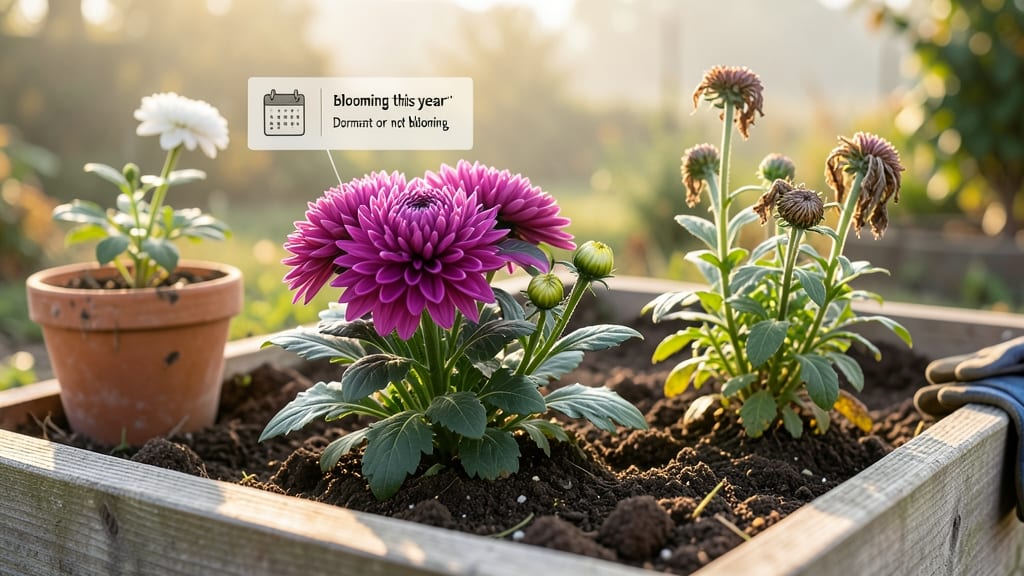
Mums (chrysanthemums) do bloom every year in USDA Zones 5-9 as perennials, but their behavior shifts in colder regions where they may only last one season. With proper deadheading, mulching, and variety selection, you can encourage vibrant reblooming for years.
These hardy plants thrive as perennials in their native zones because they develop deep root systems that store energy for next year's growth. 🌸 The key difference comes in winter—mums in Zones 5-9 survive frost, while those in colder areas often freeze back to the ground.
I've found that choosing late-blooming varieties and providing thick mulch layers makes a huge difference in extending their lifespan beyond one season.
What many gardeners don't realize is that reblooming mums actually need specific care to perform well year after year. Unlike their single-bloom cousins, they require consistent feeding and pruning to encourage new growth.
The secret lies in timing—cutting back spent blooms in early fall helps redirect energy to root development rather than seed production.
💡 In This Article
- Chrysanthemum Bloom Cycles: Perennial vs Annual Behavior
- Tips to Extend Mum Blooms Year After Year
Chrysanthemum bloom cycles: perennial vs annual behavior
Chrysanthemums are classified as short-day plants, meaning their blooming cycle is triggered by decreasing daylight hours—typically around 10-12 hours of light per day.
This natural mechanism explains why they bloom in late summer to fall, aligning with their evolutionary adaptation to cooler seasons. 🌸 In USDA Zones 5-9, where winter temperatures rarely drop below -15°F to 20°F, these plants develop robust root systems that store carbohydrates, allowing them to regenerate foliage and rebloom the following year.
The deeper the roots (often reaching 12-18 inches in ideal conditions), the better they survive winter dormancy.
The annual vs. perennial behavior comes down to cold hardiness. In Zones 5-9, mums survive winter because their roots remain insulated by soil and mulch, protecting them from frost damage.
However, in colder climates (Zones 1-4), the ground freezes solid, killing the roots and forcing gardeners to treat them as annuals. Some varieties, like 'Bonanza' or 'Mammoth', are bred for extra hardiness (Zone 5), while others, such as 'Crimson Mound', thrive in Zone 7-9.
The difference lies in their genetic tolerance for cold—some can handle -20°F, while others wilt below 10°F.
What most gardeners overlook is how daylight sensitivity interacts with temperature. Even in mild winters, if mums experience early frost before their roots fully harden, they may not survive.
This is why late-summer planting (after August 15) gives roots more time to establish before cold sets in. 🌿 In warmer zones, mums may bloom twice a year—once in spring (if pruned early) and again in fall—while colder zones typically see just one seasonal display.
The key is matching the variety to your climate and giving roots enough time to adapt.
Another critical factor is bloom type. Reblooming varieties (like 'Dynasity' series) produce multiple flushes of flowers if deadheaded consistently, while single-bloom types (like 'Korean' mums) focus all energy on one spectacular display.
The trade-off? Rebloomers require more maintenance but deliver 6-8 weeks of continuous color in optimal conditions. Single-bloomers, meanwhile, may only last 2-3 weeks but with fewer care demands.
Soil health plays a surprising role too. Mums prefer well-draining, slightly acidic soil (pH 6.0-6.5) rich in organic matter. In heavy clay soils, roots struggle to absorb moisture, leading to stunted growth and weaker winter survival.
Amending soil with compost or peat moss improves drainage while retaining moisture—critical for root development. Without proper soil prep, even hardy varieties may act like annuals due to stress.
One pro tip: If you live in a marginal zone (like Zone 5), choose late-blooming varieties (those that flower after September 1) for better winter survival. Their foliage has more time to harden before frost.
Pair this with a 4-6 inch mulch layer in late fall to insulate roots—this simple step can turn a one-year plant into a reliable perennial. 💫