
Blooming
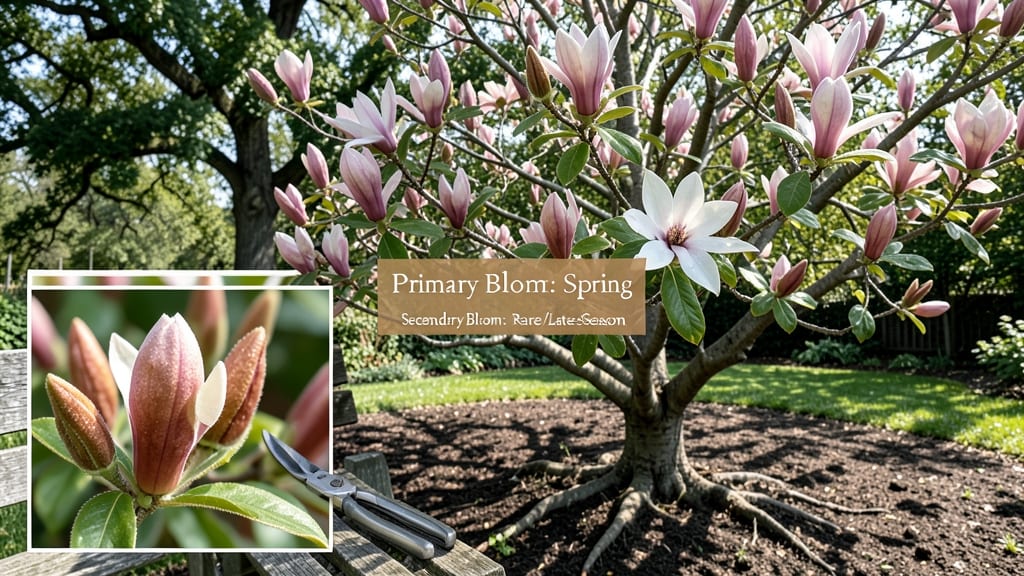
Magnolias don't typically bloom twice a year, but some tropical varieties like Magnolia liliiflora or Magnolia grandiflora may produce secondary blooms under perfect growing conditions. Most temperate species bloom just once annually for 1-2 weeks per season.
Most magnolias follow a strict seasonal schedule triggered by temperature shifts and daylight hours. 🌸 The temperate species you see in gardens—like Magnolia stellata or Magnolia × soulangeana—rely on spring's warming temperatures to push buds into bloom, and they rarely repeat the cycle.
However, tropical magnolias in warmer climates (like Magnolia grandiflora) sometimes surprise gardeners with late-season flowers if conditions stay ideal. The key difference? Tropical varieties don't need cold dormancy to reset their bloom cycle.
If you're dreaming of year-round magnolia blooms, focus on selecting the right cultivar for your climate. 🌿 For example, Magnolia liliiflora (also called "Jane" or "Nigra") occasionally produces secondary blooms in late summer if given consistent warmth and moisture.
Pruning after the main bloom and maintaining balanced soil nutrients can also encourage stronger growth—though don't expect a full second round of flowers from temperate species.
💡 In This Article
- Magnolia Bloom Cycles: Varietal Differences Explained
- Encouraging Extra Magnolia Blooms: Pruning and Care Tips
Magnolia bloom cycles: varietal differences explained
The bloom cycle of magnolias is primarily governed by their evolutionary origins. Temperate magnolias—like the iconic Magnolia stellata—follow a strict one-bloom-per-year schedule because they evolved to rely on seasonal temperature shifts.
These species require a period of cold dormancy (typically 4-6 weeks below 40°F) to reset their biological clocks, which is why they bloom only once in spring.
The buds form the previous summer, but they won’t open until the following spring when daytime temperatures consistently reach 60-65°F for at least 3-5 days. 🌸
Tropical magnolias, however, operate on a different timeline. Varieties like Magnolia grandiflora (southern magnolia) or Magnolia liliiflora (lily magnolia) lack the cold dormancy requirement and instead respond to day length and warmth.
In ideal conditions—such as USDA zones 7-10—these species may produce secondary blooms in late summer or early fall, though the flowers are often smaller and less abundant.
For example, Magnolia soulangeana (saucer magnolia) sometimes surprises gardeners with a second flush of blooms in September if summer temperatures stay above 75°F and rainfall remains consistent.
The science behind this involves florigen, a hormone that triggers flowering. In temperate magnolias, florigen production is tightly linked to cold exposure, which acts as a "reset button" for the plant’s growth cycle. Tropical magnolias, however, produce florigen more continuously when conditions are stable, allowing for occasional secondary blooms.
This is why Magnolia grandiflora might sporadically bloom in late summer—its buds are already present but remain dormant until triggered by heat and humidity. 🌿
Here’s how daylight plays a role: Most magnolias are long-day plants, meaning they bloom when daylight exceeds 12-14 hours. In temperate zones, this aligns with spring’s increasing daylight. Tropical magnolias, however, are more day-neutral, meaning they bloom based on temperature and moisture rather than strict daylight hours.
This flexibility explains why some tropical species in greenhouses or coastal climates might produce blooms year-round under controlled conditions.
Consider Magnolia liliiflora as a case study: In its native Japan, this species blooms primarily in spring but may produce a few late-summer flowers if summer rains keep the soil consistently moist. The key difference between temperate and tropical magnolias isn’t just climate—it’s their genetic programming.
Temperate species are hardwired for a single, dramatic spring display, while tropical varieties have more plasticity in their bloom cycles, though they still prioritize energy conservation over frequent flowering. 💫
For gardeners, this means choosing the right magnolia for your climate is critical. If you’re in a Zone 5-6 area, expect one stunning spring bloom from Magnolia stellata, while Magnolia grandiflora in Zone 7+ might reward you with a secondary display in late summer.
The trade-off? Temperate magnolias often have longer-lasting blooms (up to 2 weeks) compared to tropical varieties, whose secondary flowers may last only 3-5 days. 🌺