
Blooming
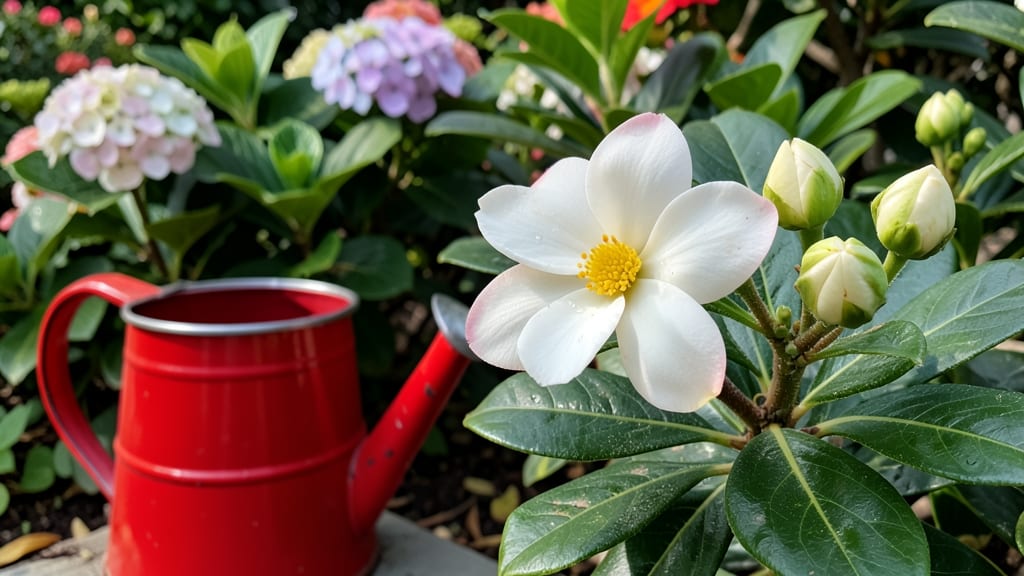
Gardenias don't bloom all summer continuously; they follow seasonal cycles with peak flowering in late spring to early summer, plus occasional blooms in fall under ideal conditions. Strategic pruning and care can lengthen their bloom periods, but they'll never flower nonstop.
Gardenias are sensitive to temperature shifts and daylight changes, which naturally regulate their blooming patterns. 🌸 In warmer climates (USDA zones 9-11), they may produce sporadic flowers in fall, while cooler zones (8-9) often see a single spring bloom cycle.
The key to extending their display lies in proper deadheading—removing spent blooms encourages new growth, while consistent moisture and balanced fertilizer support continuous development. I've found that gardenias in containers often bloom more reliably than those planted in ground, thanks to better control over their environment.
What many gardeners overlook is that gardenias actually need a brief rest period after their main bloom cycle. This dormancy helps them recharge for potential fall blooms, though it's not guaranteed.
For best results, I recommend pruning after flowering to shape the plant and encourage bushier growth—just avoid heavy cuts, as gardenias respond poorly to aggressive trimming.
💡 In This Article
- Gardenia Blooming Seasons by Climate Zones
- Prolonging Gardenia Blooms with Deadheading and Care
Gardenia blooming seasons by climate zones
Gardenias are tropical plants at heart, and their blooming cycles are directly tied to temperature ranges and daylight hours. In USDA zones 9-11 (warmest climates), they typically bloom from late spring through summer, with occasional flowers appearing in fall when temperatures stay above 65°F at night.
The key trigger is consistent warmth—below 50°F for extended periods causes buds to drop, and below 40°F can kill the plant entirely. 🌿 In these zones, you might see sporadic blooms throughout summer, but never a continuous display.
The difference between zones becomes dramatic in cooler areas. Gardenias in zones 8-9 usually produce a single, concentrated bloom cycle in late spring to early summer (May-June), often followed by a 4-6 week dormancy period as temperatures drop.
This rest phase is natural—the plant conserves energy for potential fall blooms, though these are rare without ideal conditions. Daylight hours also play a role: gardenias need 6-8 hours of direct sunlight daily, but they'll drop buds if exposed to intense afternoon sun in hot climates.
Humidity levels create another critical factor. Gardenias thrive in 60-80% humidity—dry air (common in zones 7 and below) causes buds to shrivel before opening. This is why gardeners in arid regions often see shorter bloom cycles.
In contrast, coastal areas with natural humidity (like Florida or California) can support near-continuous blooming when other conditions are met. The plant's natural rhythm makes it impossible to force all-summer blooms, but you can create optimal conditions for extended displays.
Here's how the seasons break down by zone:
- Zones 9-11: Primary bloom May-July, sporadic flowers August-October if temps stay mild
- Zones 8-9: Single peak bloom May-June, possible light fall blooms if summer was exceptionally warm
- Zones 7 and below: Rare blooms, typically only in containers with winter protection
The most reliable way to predict blooming is to track your local last frost date and average nighttime temperatures. Gardenias won't bloom until nighttime temps consistently stay above 60°F for at least 2 weeks.
This biological requirement explains why you won't see summer-long blooms—it simply violates the plant's natural growth patterns. 🌸
What most gardeners don't realize is that gardenias actually prefer slightly cooler temperatures during their bloom cycle—ideal daytime temps are 75-85°F. When summer heat exceeds 90°F for extended periods, the plant conserves energy by dropping buds rather than continuing to flower.
This heat sensitivity is why you'll often see gardenias in shaded locations in hot climates, even though they need bright light to thrive.