
Blooming
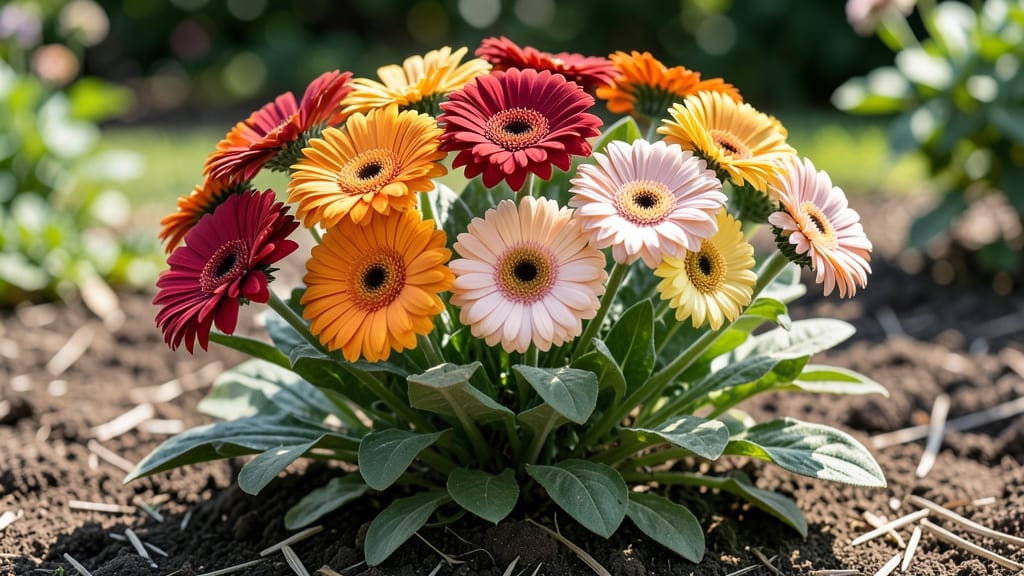
Daisies don't bloom all summer continuously—most varieties flower primarily in spring and fall, with some perennials producing sporadic reblooms. Gerbera daisies and annual types may extend their blooming periods under optimal growing conditions, but most require seasonal dormancy or regular deadheading to maintain extended displays.
Most daisies are seasonal bloomers, with their flowering cycles tied to temperature shifts and daylight hours. 🌸 Perennial varieties like Shasta daisies typically produce their best blooms in spring and again in fall, while gerbera daisies—often grown as annuals—can extend their flowering window if provided with consistent care.
The key to longer blooming periods lies in proper maintenance: regular deadheading removes spent flowers, encouraging new growth, while appropriate fertilizing and watering support continuous production. Climate plays a significant role too—warmer regions may see extended blooming seasons compared to cooler zones.
Understanding your specific daisy variety is crucial. For instance, oxeye daisies often bloom in late summer, while coneflowers may produce flowers throughout late summer into fall.
Each type has its own natural rhythm, but with attentive care—like removing faded blooms promptly—you can coax them to perform beyond their typical seasonal windows.
💡 In This Article
- Daisy Blooming Seasons by Variety Type
- Extending Daisy Blooms: Pruning and Care Tips
Daisy blooming seasons by variety type
Daisy blooming patterns are primarily governed by their biological classification—whether they're perennials or annuals—and their sensitivity to daylight hours and temperature shifts.
Perennial daisies like Shasta daisies (Leucanthemum × superbum) follow a biennial-like cycle: they produce their most abundant blooms in spring (typically April-June) and again in fall (September-October), with minimal flowering in summer.
This pattern is triggered by daylength sensitivity—longer daylight hours in spring and shorter ones in fall stimulate flowering, while the consistent summer heat (often exceeding 85°F) triggers dormancy mechanisms.
The gerbera daisy (Gerbera jamesonii), often grown as an annual, behaves differently due to its tropical origins. These vibrant bloomers thrive in warm climates and can produce flowers continuously if provided with consistent temperatures above 60°F and 12+ hours of sunlight daily.
In cooler regions, gerbera daisies may bloom from late spring through early fall (May-September), but their flowering slows dramatically when nighttime temperatures drop below 55°F. This variety's extended blooming window makes it a popular choice for gardeners seeking summer color, though it requires shelter from frost to maintain productivity.
Oxeye daisies (Leucanthemum vulgare) and coneflowers (Echinacea purpurea) offer contrasting blooming windows. Oxeye daisies typically bloom in late summer (July-August), while coneflowers produce flowers from mid-summer through fall (July-October), with some varieties reblooming if deadheaded.
The key difference lies in their root systems: coneflowers develop deep taproots that store nutrients, allowing them to push through summer heat and bloom later when many other perennials fade. This hardiness makes coneflowers particularly well-suited for dry, hot climates where moisture stress would halt other daisy varieties.
Climate zones play a critical role in shaping these blooming windows. In USDA Zone 5 (where winters drop below -20°F), most perennial daisies enter dormancy during winter and only resume growth when soil temperatures reach 50°F in spring.
Conversely, in Zone 9 (mild winters), daisies may bloom year-round with minimal seasonal interruption.
For example, a Shasta daisy in Zone 9 might produce three distinct blooming periods: spring, summer, and fall, whereas the same plant in Zone 5 would focus its energy on two strong blooming seasons separated by dormancy.
Daylight sensitivity is another critical factor. Most daisies are long-day plants, meaning they flower in response to increasing daylight (spring) or decreasing daylight (fall).
However, some varieties like the **African daisy (Arctotis stolonifera) are short-day plants, blooming in response to shorter days—typically in late summer to early fall. This adaptation explains why you might see African daisies flourishing in August-September while Shasta daisies are winding down.
Understanding these light requirements helps gardeners time their plantings for maximum impact, such as pairing spring-blooming Shasta daisies with fall-blooming African daisies for continuous color.
What most gardeners don't realize is how temperature fluctuations can disrupt blooming cycles. A sudden heatwave above 95°F can cause daisies to bolt (send up seed stalks prematurely) or enter stress-induced dormancy, halting flower production. Similarly, cool nights below 50°F can stunt growth in tropical varieties like gerbera daisies.
This is why microclimates matter—daisies planted near buildings or in containers may experience 5-10°F warmer conditions than those in open gardens, potentially extending their blooming season by 2-4 weeks**.