
Blooming
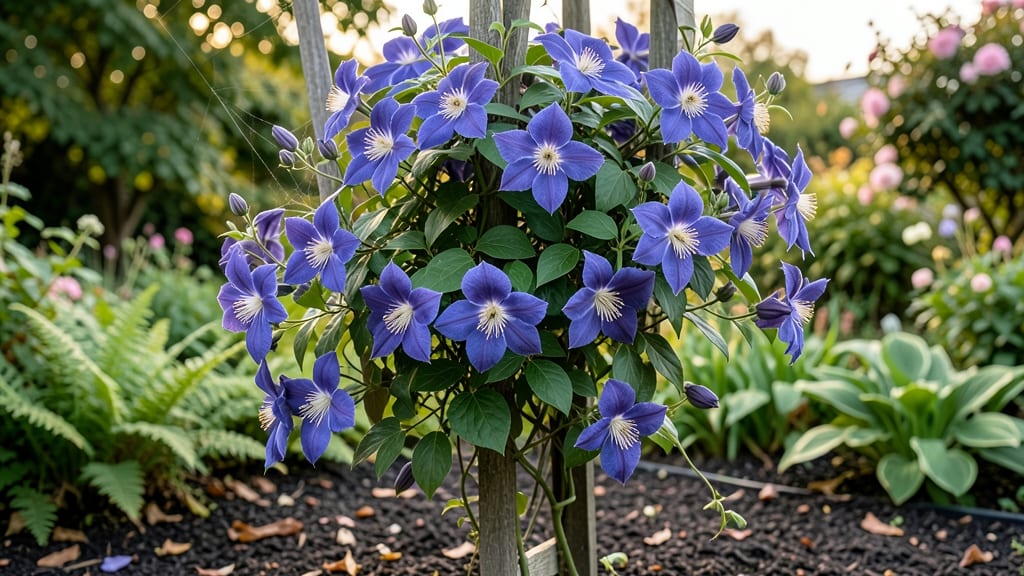
Clematis don't bloom continuously all summer—most varieties flower in distinct seasonal cycles, with early, mid, or late bloomers, though repeat-flowering types can extend their display with proper pruning and care. The bloom schedule varies by cultivar and growing conditions.
Clematis plants are famous for their dramatic blooms, but their flowering patterns aren't constant. 🌸 Many gardeners assume these vines will keep producing flowers nonstop, but in reality, most varieties have natural bloom cycles tied to their genetic makeup.
Early bloomers like 'Jackmanii' typically flower in spring, while late varieties such as 'Henryi' shine in summer or fall. The key to getting more flowers lies in understanding your specific clematis type—Group 1, 2, or 3—and adjusting your pruning schedule accordingly.
What's fascinating is how climate plays a role. In warmer regions, some clematis may bloom earlier or produce a second flush of flowers, while cooler climates might see more concentrated bloom periods.
The good news? With the right care—like proper pruning after blooming and regular feeding—you can encourage repeat flowering in many varieties, turning a single-season display into a prolonged garden show.
💡 In This Article
- Clematis Bloom Seasons by Variety Type
- Extending Clematis Blooms: Pruning and Care Tips
Clematis bloom seasons by variety type
The flowering patterns of clematis are governed by their genetic classification into three pruning groups, each with distinct bloom cycles. Group 1 varieties like 'Jackmanii' bloom on the previous year's growth and typically flower in late spring to early summer, producing large, showy blooms that last about 4-6 weeks.
Their flowering stems develop in summer and remain dormant until the following spring, which is why they don't rebloom without careful pruning.
Group 2 clematis, such as 'Niobe', are the most versatile, flowering on both old and new wood. This dual capability allows them to produce blooms in early summer (on old wood) and again in late summer or fall (on new growth).
The timing can vary by 1-2 weeks depending on your USDA hardiness zone—warmer climates (zones 7-9) often see earlier and more prolonged blooming compared to cooler zones (3-6).
Group 3 varieties like 'Henryi' bloom exclusively on new growth, producing flowers from mid to late summer. Their bloom cycle begins after pruning in early spring, with flowers developing along the current season's stems.
What makes these varieties unique is their ability to produce smaller but abundant flowers over a 6-8 week period when grown in optimal conditions with consistent moisture and balanced fertilization.
The science behind these bloom cycles involves hormonal signals called florigen, which trigger flower formation in response to temperature changes and day length. Early bloomers like Group 1 varieties respond primarily to spring temperature increases, while Group 3 types are more sensitive to summer heat and daylight hours.
This biological mechanism explains why some clematis may produce a second flush of blooms in warm climates—essentially a second wave of florigen production.
Climate plays a surprising role in extending bloom periods. In regions with mild winters (zones 7-10), Group 1 clematis sometimes produce a second bloom cycle in fall, while in colder zones (3-6), their flowering may be more concentrated.
The key factor is the length of the growing season—longer warm periods allow more time for new growth and potential reblooming in suitable varieties.
Consider these visual cues to identify your clematis type: Group 1 varieties have thick, woody stems that flower on last year's growth, while Group 3 types have thinner stems with flowers only on current season's growth.
Group 2 types show both old and new growth flowering simultaneously during their peak season.