
Blooming
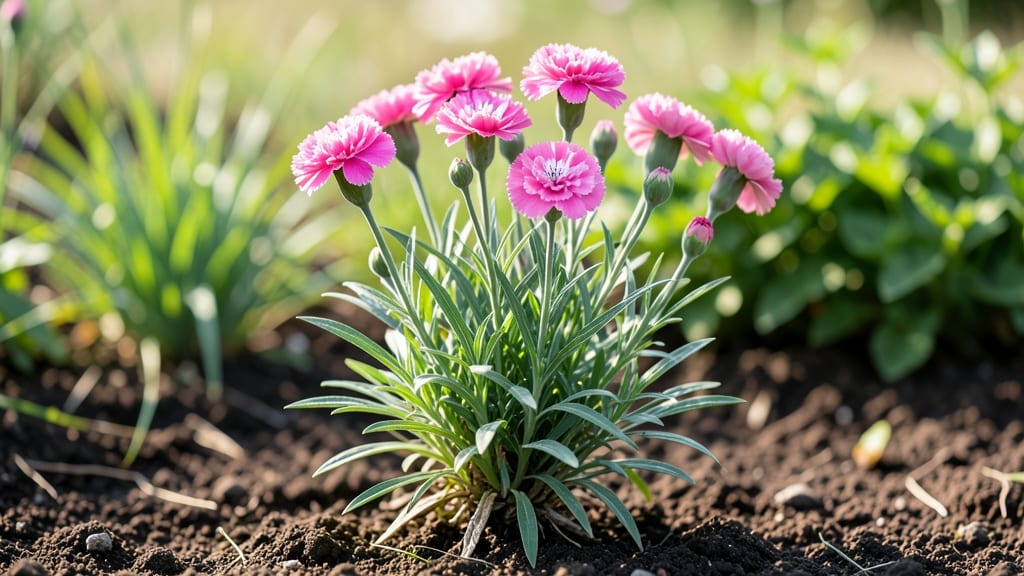
Carnations don't bloom all summer naturally, since they're primarily cool-season flowers that peak in spring and fall. Only heat-resistant varieties like Dianthus barbatus (Sweet William) or Dianthus caryophyllus (perennial carnations) can extend flowering into summer with proper summer care.
Most carnations are bred for cooler temperatures, which is why they typically fade as summer heat intensifies. 🌡️ The few varieties that can handle warmer months—like Sweet William hybrids—have thicker leaves and deeper root systems to conserve moisture.
Even these need strategic care: watering at soil level (not overhead) and providing afternoon shade can make all the difference in maintaining blooms through July and August.
What's fascinating is how these plants adapt: their flowering cycle naturally slows during heatwaves, but with consistent moisture and proper pruning, you can coax them into producing smaller but steady blooms.
I've seen gardeners in Zone 8 extend carnation seasons by up to 6 weeks using drip irrigation and reflective mulch—simple techniques that work wonders for heat-stressed flowers.
💡 In This Article
- Heat-Tolerant Carnation Varieties for Summer Blooms
- Summer Carnation Care Tips to Prolong Blooming
Heat-tolerant carnation varieties for summer blooms
Most carnations belong to the Dianthus genus and are cool-season plants, meaning they thrive when daytime temperatures stay between 60-75°F. Their natural flowering cycle aligns with spring and fall, when cooler nights help them conserve energy.
The key difference in heat-tolerant varieties lies in their botanical adaptations: thicker, waxy leaves reduce water loss, while deeper root systems (up to 12 inches) access moisture from lower soil layers. These traits allow varieties like Dianthus barbatus (Sweet William) to handle brief summer heatwaves better than traditional carnations.
Perennial carnations (Dianthus caryophyllus) are particularly resilient because they've evolved to survive multiple seasons. Their semi-evergreen foliage contains high levels of tannins, which act like natural sunscreen, protecting cells from UV damage.
For example, the 'Rainbow Bright' series can tolerate temperatures up to 85°F with proper care, while annual varieties often wilt above 80°F. The trade-off?
Heat-resistant types typically produce smaller blooms (about 1.5-2 inches wide) compared to their cool-season cousins (which can reach 3-4 inches), but they bloom more consistently.
Regional suitability plays a huge role in summer blooming success. In Zone 7-8 climates, where summer highs often exceed 90°F, only specially bred hybrids like 'Shock Wave' or 'Pactola' carnations can maintain color.
These varieties were developed using genetic traits from Mediterranean Dianthus species, which naturally grow in hot, dry summers.
What's interesting is how their flowering mechanism shifts: instead of producing one large bloom, they develop clusters of smaller flowers that open gradually—a survival strategy to spread out energy demands during heat stress.
Color also affects heat tolerance. Darker blooms (deep reds, purples) absorb more sunlight and can overheat, while lighter shades (whites, pinks) reflect heat better. This is why white carnations often outperform red ones in summer gardens.
The pigment anthocyanin, which gives dark flowers their color, actually increases water loss through a process called "transpiration," making the plant more vulnerable to wilting. For gardeners in hot climates, choosing pastel varieties can mean the difference between wilting by noon and blooming until sunset.
Another critical factor is the plant's growth habit. Upright varieties like 'Improved White' grow 18-24 inches tall and develop stronger stems that support more flowers, while trailing types (like 'Border Gem') spread wider but produce fewer blooms per stem.
The upright forms have a structural advantage in summer: their vertical growth allows air to circulate better around the foliage, reducing heat buildup at the soil level. This airflow helps prevent fungal diseases that often attack heat-stressed carnations, such as powdery mildew.
For those in extremely hot regions (Zones 9-10), consider interplanting carnations with heat-loving companions like lavender or Russian sage. These plants create microclimates that moderate temperature swings, while their aromatic oils can deter pests that target stressed carnations.
The combination of proper variety selection and companion planting can extend your carnation season by 4-6 weeks beyond what's possible with standard varieties.
What most gardeners don't realize is that even heat-tolerant carnations need a "cooling period" to reset their flowering cycle. After 6-8 weeks of summer blooming, they often go dormant until temperatures drop.
This isn't failure—it's a survival mechanism. The plants are conserving energy for their next growth phase, much like how desert plants go dormant during monsoon seasons. 🌿