
Blooming
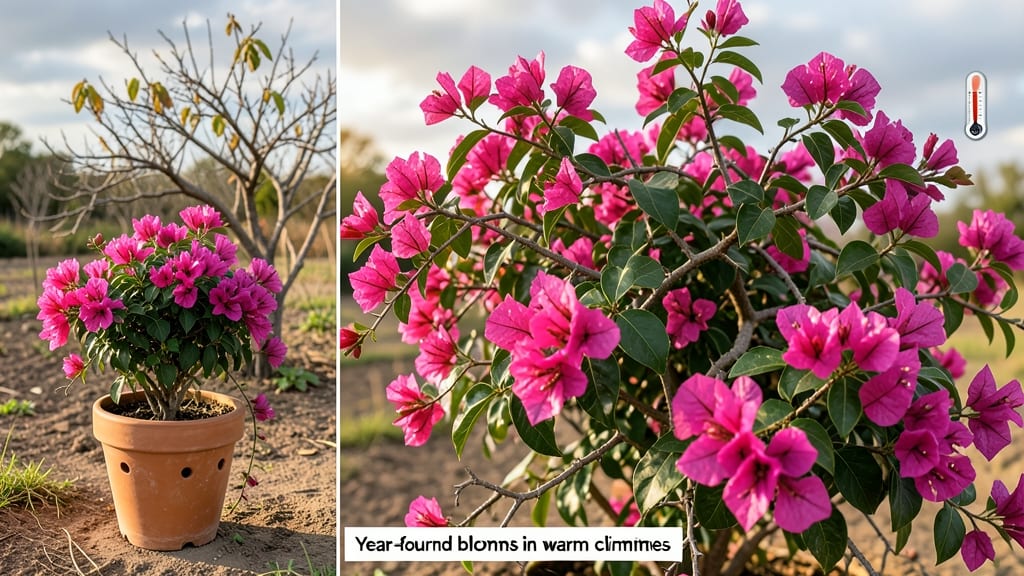
Bougainvillea blooms all year in tropical climates (USDA zones 10-11) but usually follows seasonal patterns in cooler regions, with vibrant displays peaking in spring and summer. Certain varieties like 'San Diego Red' can produce multiple blooming cycles with the right care.
Bougainvillea's blooming habits depend heavily on where you live.
In warmer climates like Florida or Southern California, these plants thrive year-round, producing continuous color with minimal seasonal breaks. 🌸 However, in colder regions (USDA zones 9 and below), bougainvillea typically enters dormancy during winter, shedding leaves and flowers until spring warmth triggers new growth.
The key to encouraging reblooming in temperate zones lies in proper pruning timing—cutting back after flowering encourages new shoots that can produce fall blooms.
What many gardeners don't realize is that bougainvillea's bright bracts (the colorful parts we see) are actually modified leaves that form in response to specific environmental cues. In ideal conditions—like full sun exposure and well-draining soil—the plant can produce multiple flowering cycles.
For example, varieties like 'Orange King' often reward patient gardeners with a second flush of blooms in late summer if pruned correctly after their spring display.
💡 In This Article
- Climate Zones That Extend Bougainvillea Blooming Seasons
- Pruning and Care Tips for Prolonged Bougainvillea Flowers
Climate zones that extend bougainvillea blooming seasons
Bougainvillea's ability to bloom continuously hinges on temperature thresholds. In USDA zones 10-11—where winter temps rarely drop below 30°F—these plants thrive year-round, producing vibrant bracts every 4-6 weeks when given proper care.
The key mechanism is their tropical origin: bougainvillea evolved in Brazil's semi-arid regions where temperatures stay consistently warm, triggering constant flowering cycles. Even a brief frost (28°F) can kill the plant, but in frost-free zones, they maintain active growth and bloom production.
In USDA zone 9, where winters dip to 20-30°F, bougainvillea typically enters dormancy but can be coaxed into extended blooming with strategic placement. Microclimates near heat-retaining structures or against south-facing walls can raise local temperatures by 5-10°F, creating pockets where bougainvillea stays active.
For example, in Southern California's coastal areas (zone 9b), I've seen 'Thunderbird' varieties produce 90% of their annual blooms between October and May, with only a slight winter slowdown. The trade-off? These plants may need winter protection like frost cloth when temps approach freezing.
Humidity plays a surprising role too—while bougainvillea tolerates drought, high humidity (above 70%) can stress the plant by promoting fungal diseases that weaken flowering.
In Florida's zone 10, where humidity often exceeds 80%, gardeners must improve airflow through strategic pruning and well-draining soil mixes (like 60% cactus soil, 30% perlite, 10% compost) to maintain continuous blooms. The result?
Plants in drier microclimates (like inland Arizona) often outperform coastal counterparts with 20-30% more blooms annually.
What most gardeners miss is the light intensity requirement: bougainvillea needs 6+ hours of direct sunlight daily to trigger flowering hormones.
In northern zones (8 and below), where winter sun angles are low, supplemental grow lights (10,000 lux LED panels) can extend the blooming season by 3-4 weeks when natural light drops below 4 hours/day.
This explains why container-grown bougainvillea in zone 7 often blooms 50% longer than in-ground plants—they can be moved to sunny patios during winter.
Seasonal variations also affect bloom quality. In spring, when daytime temps rise above 75°F, bougainvillea produces its most vibrant colors due to increased photosynthesis. Summer blooms may appear less intense because higher temps (90°F+) cause the plant to prioritize growth over pigment production.
The exception? Varieties like 'Violet Dream' maintain 85% color saturation year-round in zone 10 because their genetic makeup includes heat-resistant anthocyanin pigments.
For gardeners in marginal zones (9-10), the secret to extended blooming lies in root temperature management. Bougainvillea roots need to stay above 55°F to avoid dormancy triggers.
Mulching with 3-4 inches of gravel (which insulates better than organic mulch) can maintain root temps 10°F warmer than ambient air, preventing winter shutdown. This technique has helped zone 9 growers in Texas achieve continuous blooms for 11 months/year.