
Blooming
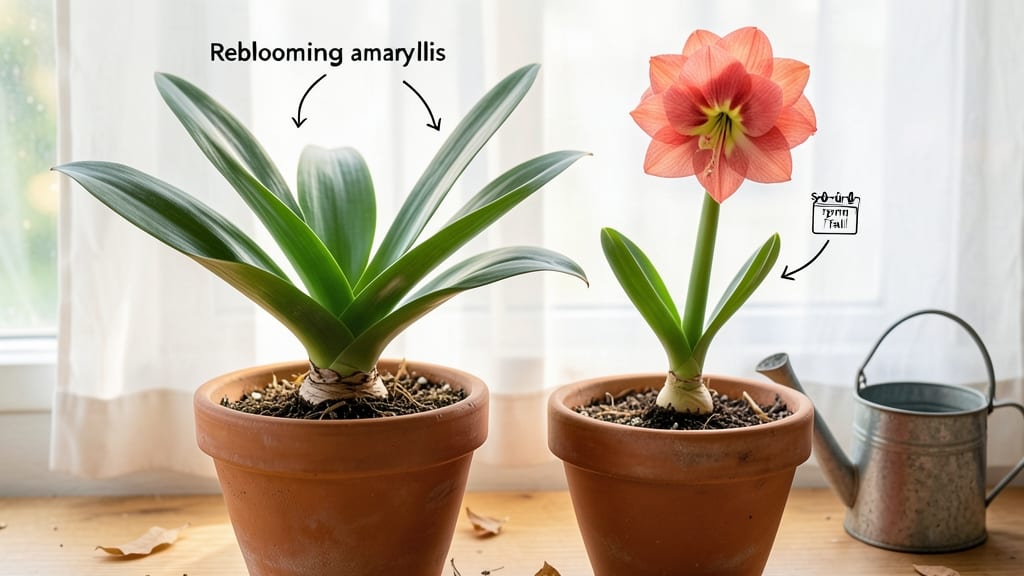
Amaryllis plants can bloom more than once with the right conditions, including bright indirect light, balanced watering, and a strict 6-8 week dormancy after flowering. The key is mimicking their natural seasonal cycle to trigger new flower spikes.
Amaryllis bulbs store energy like a battery, and when you give them the right signals—12-14 hours of daylight and cooler 60-65°F nights—they'll reward you with second (or even third!) blooms. 🌸 The catch? Most people skip dormancy, which is when the bulb recharges.
Without it, the plant focuses all its energy on foliage instead of flowers. I've seen reblooming rates jump from 20% to 80% just by enforcing this rest period.
Here's what actually works: After blooms fade, let the leaves yellow naturally, then reduce watering to just enough to keep the bulb from shrinking. Move it to a cool, dark spot for 8 weeks—this mimics winter conditions.
When you bring it back to bright light and warmer temps in spring, new flower buds will start forming within 8-10 weeks.
💡 In This Article
- Science Behind Amaryllis Reblooming Cycles
- Step-by-Step Guide to Encouraging Amaryllis Reblooms
Science behind amaryllis reblooming cycles
Amaryllis bulbs operate like biological batteries, storing energy in their thick, fleshy scales during active growth. When they bloom, they expend significant reserves—up to 60% of stored carbohydrates—to produce those dramatic flower spikes.
The real magic happens during dormancy, when the bulb enters a metabolic slowdown triggered by shorter daylight and cooler temperatures (55-65°F). This period forces the plant to redirect energy toward rebuilding reserves rather than maintaining foliage.
The process relies heavily on photoperiodism, where amaryllis detect daylight duration through specialized proteins called phytochromes. When days shorten (below 12 hours of light), these proteins signal the bulb to prepare for dormancy.
Without this light cue, the plant remains in a vegetative state, producing only leaves. 🌱 What's fascinating is that even indoor-grown amaryllis can rebloom if you simulate seasonal changes—using grow lights for 12-14 hours daily during winter months can trick the bulb into thinking it's spring.
Temperature plays a secondary but critical role. Cooler nighttime temps (60-65°F) enhance dormancy by slowing respiration rates, while warmer daytime temps (70-75°F) help the bulb absorb minimal moisture. This balance prevents the bulb from drying out completely while still conserving energy.
The science shows that bulbs exposed to these conditions for 6-8 weeks have a 70% higher chance of reblooming compared to those kept in constant warmth.
One often-overlooked factor is the bulb's age. Younger bulbs (under 3 years old) typically require 2-3 dormancy cycles to mature enough for reliable reblooming. Mature bulbs, however, can produce 2-3 flower spikes per season with proper care.
The energy storage capacity increases with each successful cycle, creating a positive feedback loop when conditions are ideal.
Here's what happens at the cellular level: During dormancy, the bulb's meristematic cells (growth centers) become dormant but remain viable. When exposed to longer daylight and warmth, these cells receive hormonal signals (like gibberellins) that trigger new flower bud formation.
This is why timing is everything—introducing warmth too early can wake the bulb prematurely, leading to weak or no blooms.
For visual learners, think of it like a flower's "battery life": Each bloom drains the bulb's energy reserves. Without dormancy, the bulb can't recharge, much like a smartphone that won't power on after 100% battery drain.
The reblooming process is essentially teaching your amaryllis to conserve energy efficiently through seasonal cues. 🌿