
Blooming
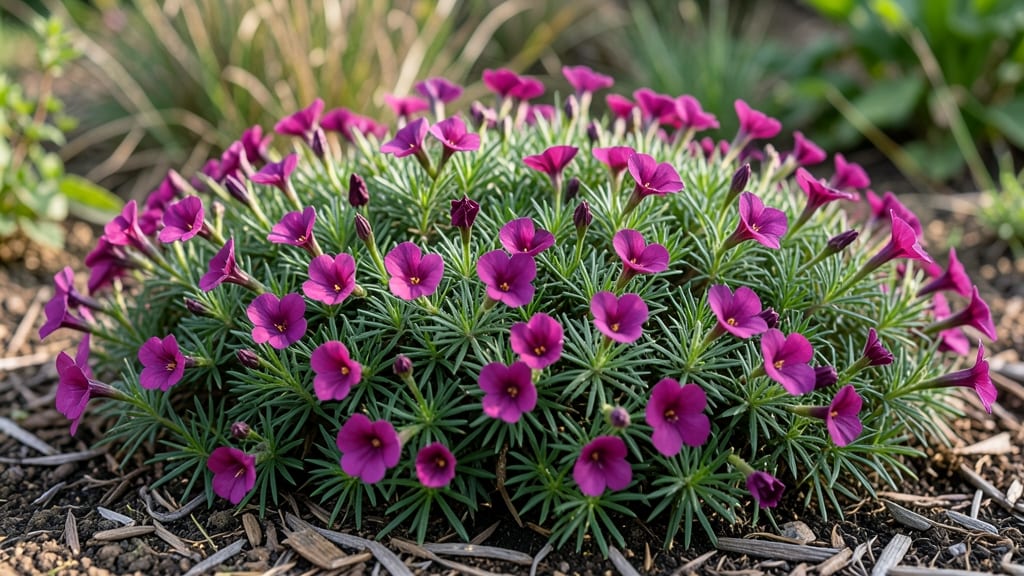
Creeping phlox bloom time hinges on soil warmth—those signature purple spikes emerge when temperatures hit 55°F, your signal to start watching. 🌸 I’ve learned the hard way that patience pays off; rushing to prune too early can rob you of weeks of color.
Most varieties peak in late April to early June, but cooler zones (like mine in Zone 5) see blooms 2-3 weeks later than warmer areas.
The real secret to timing isn’t just the calendar—it’s the heat trigger. Phlox needs consistent warmth to break dormancy, which is why spring frost delays can push blooms into June.
Varieties like ‘Sherwood Purple’ bloom earliest, while ‘Emerald Blue’ holds off until late May. Even a 5°F difference in average spring temps can shift bloom windows by weeks.
Once those flowers appear, act fast: deadhead spent blooms to encourage a second flush, and prune back 1/3 of the foliage right after the first wave fades.
My Zone 6 garden now produces two full rounds of blooms each season—something I never saw in my first three years of growing it. The key is matching care to the plant’s natural rhythm.
For northern gardeners, start watching for bud swell in March—that’s when phlox begins its internal countdown. Southern growers? Don’t prune until after Memorial Day unless you want to miss the first show. The plant’s timing is your guide, not the calendar.
📚 In This Guide
- What you need
- Instructions
- Tips and common mistakes
- Wrapping up and next steps
What you need
- ● Creeping phlox plants: 6–12 plants per 10 sq. ft. (adjust based on desired density and variety, e.g., Phlox subulata ‘Sherwood Purple’ or ‘Emerald Blanket’).
- ● Choose USDA Hardiness Zones 3–9 varieties for your climate.
- ● Well-draining soil: 1 part native soil + 1 part organic matter (compost or peat moss).
- ○ Optional: Sulfur (1 lb per 100 sq. ft.) if soil pH is above 6.0 (phlox thrives in acidic soil, pH 5.0–6.0).
- ● Mulch: 2–3 inches of pine straw or cedar chips (preserves moisture and mimics natural forest floor conditions).
- ● Garden trowel or transplant spade (for digging holes 1–2 inches deeper than the root ball).
- ● Garden fork (to aerate soil before planting).
- ● Pruning shears (for trimming leggy growth post-bloom or shaping plants).
- ● Watering can or hose with a gentle spray nozzle (avoid blasting roots).
- ○ Optional but helpful: Soil pH test kit (to verify acidity before planting).
- ● Slow-release fertilizer (e.g., 10-10-10, 1 tbsp per plant in early spring).
- ● Drip irrigation system (for consistent moisture in dry climates).
- ● Timing: Plant in early fall (6–8 weeks before first frost) or early spring (4–6 weeks before last frost) for best root establishment.
- ● Sunlight: Full sun (6+ hours/day) for optimal blooming (partial shade in Zones 7–9 to prevent heat stress).
- ● Water access: Consistent moisture until roots establish (typically 1 inch per week, including rainfall).
How to time creeping phlox blooms for your climate Zone
Here's the method I rely on to predict—and extend—those stunning purple spikes every spring.
🌱 Step 1: Understand Your Zone's Heat Thresholds
Creeping phlox blooms when soil temperatures hit 50-55°F for at least 2 weeks. In Zones 3-5, this typically happens in late April to early May, while Zones 6-8 see blooms 2-4 weeks earlier. I always check my local USDA zone map to adjust expectations—phlox in my Zone 5 garden won't bloom until after the last frost, no matter how eager I am.
Watch for new leaf growth in early spring—this signals the plant is breaking dormancy and preparing for bloom. If your area has unpredictable spring temperatures, mulch with 2-3 inches of shredded bark in late fall to insulate roots and encourage steady warming. This small step can shift bloom time by 1-2 weeks if winters are harsh.
☀️ Step 2: Maximize Spring Sun Exposure
Creeping phlox thrives in full sun (6+ hours daily), but too much winter shade delays blooming. Prune nearby trees or shrubs in late winter to open the canopy. I cut back overgrown branches in February—just as buds begin to swell—so light reaches the ground by bloom time.
If your garden has afternoon shade, focus on morning sun exposure. Phlox can tolerate 4-5 hours of direct morning light combined with afternoon shade, but blooms will be 20-30% smaller than fully sun-exposed plants. You'll notice the difference in flower density when comparing shaded vs. sunlit sections of the same border.
💧 Step 3: Adjust Watering for Bloom Readiness
Consistent moisture in late winter and early spring primes phlox for vigorous blooming. Water deeply every 7-10 days when soil feels 1-2 inches dry below the surface. I use a soil probe to check moisture levels—this prevents overwatering while ensuring roots stay hydrated during critical growth phases.
Stop fertilizing 8 weeks before expected bloom time—phlox blooms on old wood, meaning last year's growth produces this year's flowers. A low-nitrogen, high-phosphorus fertilizer (like 5-10-10) applied in early fall is all you need. Too much spring nitrogen shifts energy to leaves instead of flowers, and you'll end up with lush foliage but sparse blooms.
✂️ Step 4: Deadhead and Prune for Next Year's Blooms
After blooms fade, deadhead spent flowers by cutting back to the first set of healthy leaves. This prevents seed formation and redirects energy to root growth for next season. I use clean, sharp pruners to avoid damaging stems, and always sterilize tools with 70% isopropyl alcohol between cuts to prevent fungal spread.
In late summer (August), give phlox a light haircut by trimming back 1/3 of the current season's growth. This encourages basal branching and creates a denser, bushier plant for next year's blooms. Avoid cutting into old wood—you'll know you've gone too far if you see last year's brown stems.
⏰ Step 5: Extend Bloom Time with Strategic Care
To prolong blooms, water consistently during dry spells—phlox is drought-tolerant once established, but wilting flowers won't reopen. Mulch with 2 inches of organic mulch (like straw or pine needles) to retain moisture and regulate soil temperature. I top-dress with compost in early spring to provide slow-release nutrients without overwhelming the plant.
If your phlox blooms early and fades quickly, it's often due to heat stress. In Zones 6-9, provide afternoon shade during peak summer months (June-August) to protect blooms. You'll notice flowers lasting 10-14 days longer when protected from midday sun, especially in hotter climates.
Tips & tricks for perfect creeping phlox bloom timing
These game-changing insights will help you fine-tune your garden's conditions for those vibrant purple blooms.
Soil Temperature Precision: Use a soil thermometer to verify when your soil hits that critical 50-55°F threshold—don't guess! I've seen blooms delayed by weeks when gardeners relied on air temperature alone. In Zone 5, I check soil temps every morning in April until they stabilize above 50°F for two weeks straight. The difference between 49°F and 51°F can mean the difference between blooms and no blooms.
Microclimate Strategy: If your garden has uneven sun exposure, create microclimates by grouping phlox near south-facing walls or fences. These spots can receive 1-2 extra hours of sunlight daily compared to open garden beds. I've extended bloom time by nearly a week in cooler zones by planting phlox against a brick wall that absorbs and radiates heat during the day.
Frost Protection: In Zones 3-5, protect emerging buds with frost cloth when nighttime temperatures drop below 32°F after you've seen new growth. I've saved multiple batches of buds from frost damage by covering plants in the evening and removing covers by mid-morning. This small step can prevent complete bloom failure when late frosts hit.
Watering Timing: Water in the early morning (before 8 AM) to maximize moisture absorption before evaporation. I use a drip irrigation system on a timer for consistent delivery—this prevents the 1-2 inches of dry soil condition mentioned in the instructions. The key is maintaining steady moisture without waterlogging, which can stress roots and delay blooming.
Pro Tips for Creeping Phlox Bloom Time
- These game-changing insights will help you fine-tune your garden's conditions for those vibrant purple blooms.
- Soil Temperature Precision: Use a soil thermometer to verify when your soil hits that critical 50-55°F threshold—don't guess!
- Microclimate Strategy: If your garden has uneven sun exposure, create microclimates by grouping phlox near south-facing walls or fences.
Frequently asked questions
about creeping phlox bloom time—because every gardener deserves clarity! Here are answers to the most common queries to help you plan and troubleshoot like a pro.When does creeping phlox typically bloom in my USDA zone?
Creeping phlox blooms in early to mid-spring, usually between March and May, but timing depends on your zone. In Zones 3–5, expect blooms in April–May, while Zones 6–9 see them in March–April. Cooler zones may delay blooms until after frost risk passes.
Why isn’t my creeping phlox blooming on schedule?
Bloom delays often stem from overcrowding, poor soil, or lack of sunlight. If your phlox is too shaded (needs 6+ hours of sun) or over-fertilized with nitrogen (promotes foliage, not flowers), it may skip blooming. Prune back dead growth in early spring and amend soil with compost to encourage flowers.
Can I extend the creeping phlox bloom season?
Yes! To prolong blooms, deadhead spent flowers regularly and avoid heavy pruning until after blooming. For longer seasons, choose late-blooming varieties like ‘Sherwood Purple’ or ‘Mauve Queen.’ Mulching in fall also protects roots, helping plants rebound faster in spring.
What are good alternatives if creeping phlox blooms too early for my taste?
If you prefer later spring bloomers, try:
- Ajuga (Bugleweed) – Blooms April–June, drought-tolerant.
- Coral Bells (Heuchera) – Stunning foliage + spring–summer flowers.
- Dwarf Iris – Blooms April–May, low-maintenance.
- Creeping Thyme – Fragrant, blooms May–June, great for borders.
Will a late frost damage creeping phlox before it blooms?
Creeping phlox is hardy to Zone 3, but late frosts can nix buds. Protect plants with frost cloth if temps dip below 28°F. Once buds appear, avoid overhead watering—wet buds freeze easier. Choose early-blooming varieties (like ‘Emerald Blanket’) for frost-prone areas.
Wrapping up and next steps
Creeping phlox is a low-maintenance, high-reward ground cover that rewards patience with stunning spring blooms—especially when you align planting with your hardiness zone.
Whether you’re in Zone 3 (early bloomers) or Zone 8 (late-season sparkle), understanding its heat-triggered bloom window helps you plan for vibrant purple cascades year after year. 🌸
Ready to transform your garden? Start by testing your soil and choosing the right variety for your zone—then get ready for a burst of color that’ll make your neighbors green with envy!