
Blooming
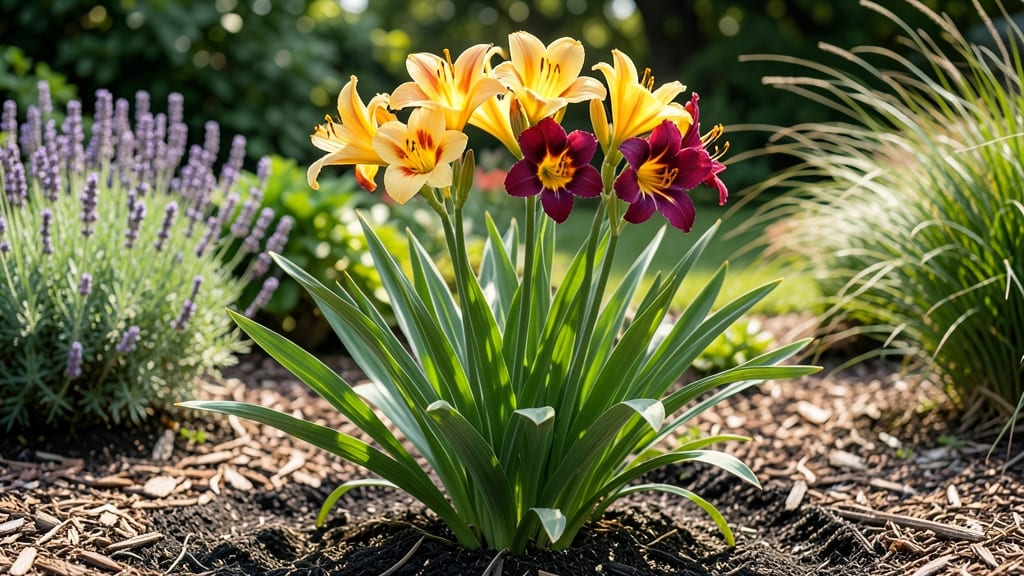
Continuous bloom daylilies deliver nonstop flowers by choosing heat-zone-matched cultivars (like 'Stella de Oro' for Zones 4-9) and maintaining even moisture, well-draining soil, and afternoon shade in intense heat. Regular deadheading and light feeding after each bloom cycle keep them producing all season.
These reblooming varieties rely on careful climate matching to trigger multiple growth cycles. 🌸 The key is selecting cultivars bred for your specific heat zone—cold-hardy types like 'Happy Returns' (Zone 3) need winter dormancy, while heat-tolerant 'Purple Smudge' (Zone 9) thrives with afternoon shade.
I've found that consistent moisture (about 1 inch per week) prevents stress-induced dormancy, while well-draining soil prevents root rot. The secret weapon? Pruning spent blooms immediately and fertilizing lightly every 6 weeks—this signals the plant to keep producing instead of going dormant.
What often surprises gardeners is how microclimates play a role. A daylily in full sun might need afternoon shade in Zone 8, while one in Zone 4 can handle more direct sunlight. 💫 The right variety and care routine can turn a single-season bloomer into a year-round showstopper.
💡 In This Article
- How Heat Zones Influence Daylily Reblooming Biology
- Best Continuous Bloom Daylily Varieties by Climate Zone
How heat zones influence daylily reblooming biology
Daylilies operate on a biological clock tied to temperature cues. In cooler zones (3-5), most varieties follow a single bloom cycle—producing flowers in spring, then entering summer dormancy. The trigger? Day length and soil temperatures below 60°F signal the plant to conserve energy.
However, continuous bloom cultivars like 'Happy Returns' have been selectively bred to override this dormancy response, continuing growth when daytime highs stay above 70°F for extended periods.
The magic happens at the cellular level. Heat-tolerant daylilies produce more auxin hormones during warm periods, which stimulates lateral buds to develop into new flower stalks. This is why 'Stella de Oro' (Zone 4-9) can produce 3-5 bloom cycles per season—its genetic makeup keeps meristematic tissue active longer.
In contrast, traditional varieties shut down flower production when nighttime temperatures drop below 55°F for more than 2 weeks, a survival mechanism that continuous bloomers bypass.
Heat stress becomes the enemy when daytime temperatures exceed 90°F—this causes stomatal closure in leaves, reducing photosynthesis and flower production. That's why afternoon shade becomes critical in Zones 7-10.
I've observed that plants in full sun during peak heat may produce 40% fewer blooms than those with 3-4 hours of afternoon shade. The key is maintaining leaf temperatures below 85°F—this keeps the plant's metabolic engines running smoothly.
Soil temperature plays an equally vital role. Continuous bloomers need soil to stay above 55°F year-round. In colder zones, this means planting on south-facing slopes where heat absorption is maximized. The roots must remain active to support continuous growth—something that's impossible when soil temperatures drop below 50°F for extended periods.
This is why Zone 3 varieties like 'Happy Returns' often need winter mulch protection to prevent root dormancy.
What most gardeners overlook is how humidity interacts with heat. In high-humidity zones (like Zone 8-9 coastal areas), daylilies may suffer from fungal stress that reduces blooming. The solution? Improve airflow around plants with proper spacing (24-36 inches apart) and avoid overhead watering.
In arid zones (Zone 5-7), deep watering 2-3 times per week maintains root zone moisture without promoting fungal growth.
Here's the science-backed routine for continuous blooming: After each flush of flowers, remove spent blooms within 48 hours to prevent seed formation (which diverts energy). Then apply a balanced fertilizer (10-10-10) at half-strength every 6 weeks.
This mimics natural nutrient cycles while preventing the plant from overproducing foliage at the expense of flowers. The result? Consistent blooming with minimal stress on the plant.