
Blooming
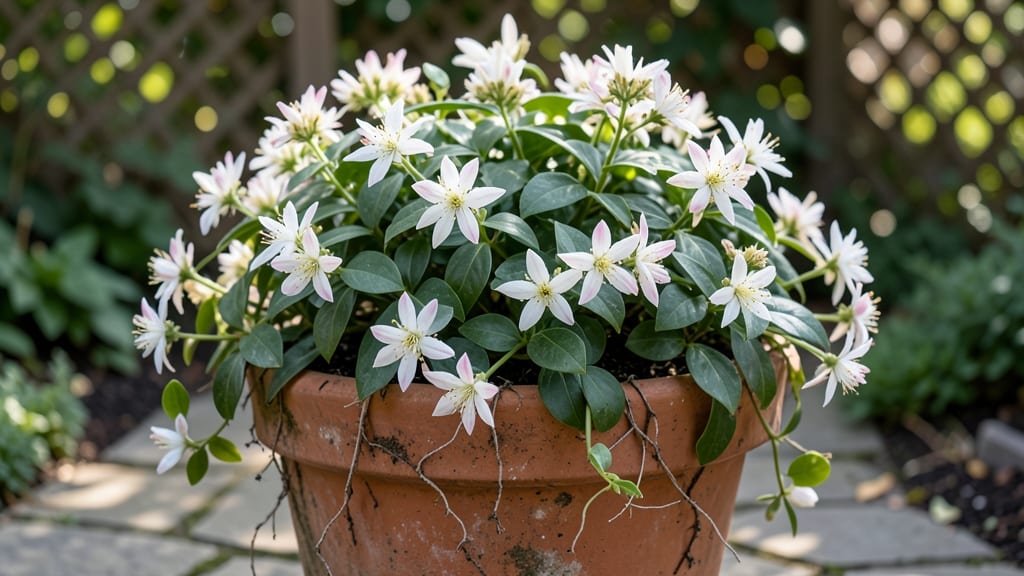
The confederate jasmine bloom time in late spring to early summer is triggered by warm temperatures and proper care.
If you’ve ever wondered why your Confederate jasmine blooms sporadically—or why some varieties explode with fragrant white flowers while others barely bud—heat and timing are the secret ingredients.
This heat-loving vine thrives in USDA Zone 6a and warmer, where blooms typically appear between April and June, depending on your local climate. In cooler zones, expect flowers to arrive slightly later, often in late spring or early summer.
Below, I’ll break down the exact bloom stages by variety, how to encourage longer flowering, and the key care adjustments that make all the difference between a modest show and a showstopping display.
Confederate jasmine bloom time: heat-triggered stages by variety
Confederate jasmine (Trachelospermum jasminoides) thrives on heat, and its bloom timing is directly tied to temperature thresholds between 75°F–95°F. Unlike cool-season bloomers, this vine waits for warm spells to trigger its fragrant white flowers.
Understanding these heat-triggered stages helps you predict—and even encourage—when your plant will shine. Varieties like ‘Beckii’ and ‘Little Gem’ have distinct bloom windows, making timing everything for a show-stopping display.
Most Confederate jasmine varieties bloom in late spring to early summer, but the exact timing depends on local climate and microclimates.
For example, ‘Gulf Breeze’ often blooms earlier in Zone 9+ due to prolonged heat, while ‘Little Gem’ may wait until June or July in cooler Zone 7. The key is recognizing when your plant hits its optimal temperature trigger, usually after 3–5 consecutive days above 80°F.
Here’s how three popular varieties align with heat and bloom stages, including early, mid, and late-season performers:
Each variety responds differently to temperature spikes, which is why ‘Gulf Breeze’ might bloom in April in Miami but wait until June in Atlanta. The 3–5 day heat trigger is critical: your plant needs consistent warmth to set buds.
For example, if temperatures dip below 70°F for more than 24 hours, buds may drop. This is especially true for ‘Beckii’, which is more sensitive to cool snaps.
To maximize blooms, monitor your local heatwave patterns. Use a soil thermometer to track when roots hit 75°F+, signaling it’s time for flowers. In containers, heat escapes faster, so move pots to shadier spots during 100°F+ days to prevent bud drop.
Varieties like ‘Little Gem’ benefit from morning sun and afternoon shade, extending their bloom window by 2–3 weeks.
Not all blooms are created equal: ‘Summer Snow’ produces larger, more abundant flowers when given consistent afternoon heat (think 3–5 PM sun). In contrast, ‘Beckii’ prioritizes early blooms and may struggle in high-humidity zones like Zone 10 if airflow is poor.
The solution? Prune for airflow and avoid over-fertilizing with high-nitrogen feeds, which can delay flowering.
Pro tip: If your Confederate jasmine blooms sparingly, it might be stressed. Check for underwatering (wilting leaves) or overwatering (yellowing foliage). Aim for 1–1.5 inches of water weekly and ensure pots have drainage holes.
Mulch with wood chips to regulate soil temperature, keeping roots in the ideal 75
USDA Zone-specific bloom windows: when to expect flowers by climate
Confederate jasmine (Trachelospermum jasminoides) thrives in warm climates, but its bloom timing shifts dramatically across USDA hardiness zones.
In Zone 8 and above, you’ll see fragrant white blooms as early as late April to May, while gardeners in Zones 6-7 may wait until June or July for flowers. The key? Consistent daytime temperatures above 75°F trigger budding, but cooler zones need extra warmth.
Microclimates play a huge role too. A south-facing trellis or protected patio can push blooms 2-4 weeks earlier in cooler zones, while shady spots delay flowering until summer’s peak heat. Even in Zone 10, where blooms start in March, a late frost can stall growth until May.
Understanding these patterns helps you time pruning and fertilizer for maximum impact.
In Zone 10 and 11, Confederate jasmine often blooms twice yearly—once in spring and again in fall—if summer heat doesn’t stress the plant. However, Zone 6 gardeners should focus on one robust bloom cycle in late summer, using slow-release fertilizer in early June to fuel flowers.
The ‘Gulf Breeze’ variety is a standout for cooler zones, blooming 1-2 weeks earlier than standard types.
Watch for bud drop in transitional zones (7-8). This happens when nighttime temps dip below 60°F after a heatwave. To prevent it, mulch heavily in spring and avoid overwatering, which stresses roots.
In Zone 9, where humidity is high, spider mites can reduce blooms—spray with neem oil before buds form for prevention.
Container growers in Zones 5-6 can extend the season by moving pots to sunny patios in May and back to shade in September. This mimics Zone 7 conditions and often triggers blooms 3-4 weeks earlier than in-ground plants.
Just ensure pots have drainage holes to avoid root rot from cool, wet soil.
Pro tip: Track your local heat degree days (HDD) to predict blooms. Confederate jasmine typically needs 1,200+ HDD above 50°F to flower. Use a weather app or garden journal to note when your plant hits this threshold—it’s your bloom countdown! ☀️🌸