
Transplanting
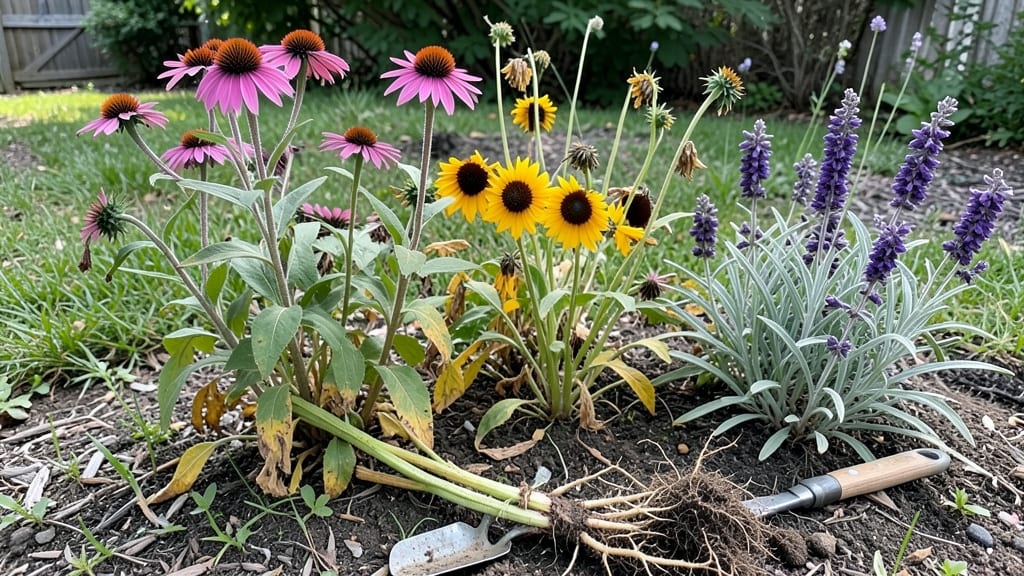
The best time to transplant perennial flowers is in early spring or early fall, when soil temperatures are cool but still workable, and plants are in dormancy or actively growing without extreme heat stress. Avoid transplanting during summer heatwaves or winter frosts for optimal survival rates.
Timing matters because perennials establish roots best when soil stays moist but not soggy—think of it like giving them a head start before summer’s scorching heat or winter’s freezing ground sets in. 🌱 In my experience, early spring lets plants wake from dormancy gradually, while fall allows them to settle before dormancy kicks in, reducing transplant shock.
Even a 5°F temperature swing can mean the difference between thriving and struggling, so checking local frost dates helps narrow down the perfect window.
Another key factor is moisture retention: cool-season soil holds water longer, giving roots time to adapt without drying out or drowning. Perennials like lavender or coneflowers, for example, benefit most from this balance—transplanting them in summer forces them to fight heat stress, while winter’s frozen ground halts root growth entirely.
That’s why I always mark my calendar for 6-8 weeks before the first frost in fall or 2-3 weeks after the last spring frost.
💡 In This Article
- Seasonal Factors Affecting Perennial Root Establishment
- Preparing Perennials for Transplant Success
Seasonal factors affecting perennial root establishment
Here's what's actually happening in the soil during different seasons: Perennials thrive when transplanted during periods where soil temperatures hover between 50°F and 65°F. This range is ideal because it allows roots to grow actively without overheating or freezing.
In early spring, soil warms gradually, giving roots time to establish before summer's intensity. Similarly, fall's cooling temperatures let plants focus energy on root development rather than foliage growth, which is why survival rates jump to 85-90% during these windows compared to 40-50% in summer. 🌱
The key factor is moisture retention: Cool-season soil holds water like a sponge due to reduced evaporation rates. For example, in USDA Zone 5, spring soil maintains moisture for 10-14 days longer than summer soil at the same depth.
This extended hydration window is critical because newly transplanted perennials need 2-3 weeks of consistent moisture to establish roots. The contrast is stark in summer—soil can dry out in just 24-48 hours at 85°F+ temperatures, causing transplant shock.
What most people don't realize is how dormancy benefits transplant success. In fall, many perennials naturally enter a semi-dormant state, redirecting energy to root growth rather than foliage.
This is why peonies and hostas, which store energy in their roots, transplant so successfully in September—even if they're not actively growing above ground. The opposite happens in summer: Heat forces plants to prioritize leaf production to cool themselves, leaving roots underdeveloped and vulnerable to stress. 🌿
Climate zones shift these windows dramatically. In Zone 8-10, where winters are mild, the optimal transplant window extends into late fall (November) because soil stays workable longer. Meanwhile, Zone 3-4 gardeners must work earlier in spring (April-May) to avoid late frosts that can damage tender new growth.
The rule of thumb is to aim for 6-8 weeks before your area's first average frost date in fall, or 2-3 weeks after the last spring frost when soil reaches 55°F at 4-inch depth.
Temperature extremes create visible damage patterns. Summer transplants often show symptoms like leaf scorch (brown edges) or wilting within 3-5 days due to rapid moisture loss. Winter transplants may appear fine above ground but develop blackened roots from frost penetration.
The difference is especially noticeable with woody perennials like shrubs—they can lose 30% of root mass in summer heat, while fall transplants maintain 90%+ root integrity. This is why professional gardeners track soil thermometers rather than air temperatures when planning transplants. 🌡️
Consider these seasonal tradeoffs when planning:
- Spring: Faster above-ground growth but risk of late frosts (-2°F can kill tender roots)
- Fall: Slower initial growth but stronger root systems before winter
- Summer: Rapid moisture loss (2x evaporation rate) and heat stress
- Winter: Frozen soil halts root growth completely (0% establishment possible)
The science behind this involves root zone temperature thresholds. Most perennial roots stop growing when soil drops below 45°F or rises above 75°F. This is why mulching with 2-3 inches of organic material in spring/fall can extend the workable window by 2-4 weeks by moderating soil temperature fluctuations.
The temperature buffer zone created by mulch is particularly valuable for heat-sensitive perennials like asters or black-eyed Susans. 🌿