
Blooming
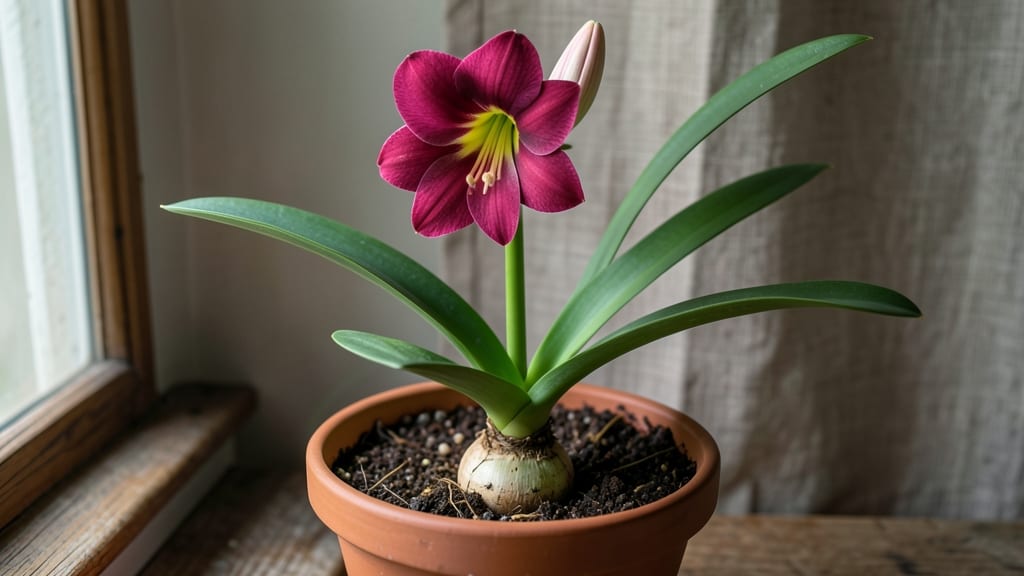
Your amaryllis blooms in 6-8 weeks when you time it right—no waiting months for those showstopping 🌸 flowers.
Picture this: You plant the bulb in early fall, and by December, your home is bursting with color. But what if you miss the window? Or if your bulb just won’t cooperate? The secret lies in understanding light exposure, temperature control, and even the right fertilizer.
I’ll break down the exact steps to force blooms on schedule, whether you’re growing indoors or outdoors in Zone 6a.
Beyond timing, you’ll learn how to extend those blooms for 4-6 weeks—cutting stems the right way, adjusting humidity, and avoiding common mistakes that kill flowers early. No more guessing whether your amaryllis will bloom or not.
Ready to transform your bulb into a year-round showstopper? Here’s how to predict, trigger, and maximize every bloom—so you’re never left waiting.
How to force amaryllis blooms: step-by-step timeline for fast flowering
Forcing an amaryllis bulb to bloom on your schedule is easier than you think. By mimicking its natural winter dormancy and controlling light exposure, you can trigger vibrant blooms in just 6-8 weeks.
The secret lies in precise timing—whether you're starting in fall for winter blooms or spring for summer flowers. Let’s break down the exact steps to make it happen.
Your journey begins with selecting a healthy amaryllis bulb (at least 3 inches wide) and a well-draining pot. The key phases—dormancy simulation, rooting, and bloom induction—must follow this timeline to avoid leggy stems or no buds.
Miss a deadline, and your plant might take months to flower instead of weeks. Don’t worry; I’ll guide you through every critical step.
🌱 6-8 Week Amaryllis Bloom Timeline
-
Week 1-2: Dormancy Phase
Place bulb in cool, dark spot (60-65°F) with minimal water. Stop watering entirely if soil is damp.
-
Week 3: Root Growth
Move bulb to bright indirect light (6-8 hours/day). Water lightly when soil is dry to the touch.
-
Week 4-5: Stem Emergence
Increase water to 1 inch per week. Rotate pot weekly for even light exposure.
-
Week 6: Bloom Trigger
Move to direct sunlight (4-6 hours/day). Fertilize with balanced 5-10-10 at half-strength.
-
Week 7-8: Flowering
Keep soil moist but not soggy. Remove dead blooms to encourage reblooming.
⏰ Critical Deadline: Stop watering 2 weeks before dormancy to reset the cycle.
Start by choosing your planting window. For winter blooms, plant bulbs in September-October so they flower by Christmas. For spring/summer blooms, plant in February-March. The key is to simulate the bulb’s natural dormancy period—just like it would in its native South African habitat.
Without this step, your amaryllis may refuse to bloom.
During the dormancy phase (Weeks 1-2), place your bulb in a cool, dark location (like a basement or closet) at 60-65°F. This mimics winter conditions and signals the bulb to break dormancy.
Water sparingly—only enough to prevent the bulb from shriveling. Overwatering here is the #1 mistake that delays blooming. Use a moisture meter to check soil levels.
At Week 3, move your bulb to a bright, indirect light source (e.g., an east-facing window). This is when roots begin to sprout. Water lightly when the top 1 inch of soil feels dry.
Avoid soggy soil—root rot will kill your bulb before it flowers. A clear glass jar with small holes works perfectly for humidity control during this phase.
By Week 4-5, your amaryllis should show signs of life: a green shoot or roots. Increase water to 1 inch per week and rotate the pot weekly to prevent the stem from leaning toward the light.
This ensures straight, sturdy stems that support heavy blooms. If your stem grows too fast but stays short, it’s a sign of insufficient light—move it closer to a window.
The Week 6 bloom trigger is critical. Move your plant to direct sunlight (4-6 hours/day) and fertilize with a balanced 5-10-10 fertilizer at half-strength. This jumpstarts flowering hormones.
Avoid high-nitrogen fertilizers—they promote leafy growth but delay blooms. If your plant hasn’t produced a stem by now, it may need 2 more weeks of dormancy before retrying.
Finally, during Weeks 7-8, your amaryllis will reward you with vibrant blooms! Keep the soil moist but not waterlogged and remove dead flowers promptly. This encourages the plant to redirect energy into new buds.
For indoor plants, a humidity tray (pebbles + water) can extend bloom time by 1-2 weeks. Once flowers fade, let the foliage die back naturally to prepare for next year’s cycle.
Pro tip: To force a second bloom, repeat the dormancy process after the first flowers fade. Many gardeners skip this step, but reblooming amaryllis is possible with patience!
Just remember—each cycle requires 6-8 weeks of careful care. With this timeline, you’ll have Christmas blooms or summer color without waiting a full year.
Amaryllis bloom time factors: why your bulb might need 6-12 weeks (or more)
Your amaryllis bloom time depends on more than just patience—it’s a dance between bulb maturity, light exposure, and variety traits. A large, healthy bulb (like ‘Apollo’) may bloom in just 6-8 weeks, while smaller bulbs or ‘Red Lion’ varieties often take 10-12 weeks or longer.
Even with perfect care, some bulbs need extra time to store energy for those showstopping flowers.
The light intensity you provide is another game-changer. Bright indirect light (like an east-facing window) speeds up blooming, while low-light conditions can stretch the timeline to 3-4 months. If your amaryllis is leggy and stretching toward the light, it’s signaling stress—and that delays buds by weeks.
Think of it as your plant’s way of saying, “I need more sun to bloom faster!”
Don’t overlook the fertilizer type you’re using. A high-nitrogen feed (like lawn fertilizer) pushes leafy growth but starves blooms, while a balanced 5-10-10 formula prioritizes flowers. I once used the wrong mix and waited 14 weeks for buds—only to realize I’d been feeding my amaryllis like a vegetable plant!
Timing matters too: Feed lightly every 4-6 weeks during active growth, then stop 6-8 weeks before you want blooms.
If your amaryllis has leggy stems but no buds, it’s likely starving for light or over-fertilized. Trim the stems back by one-third to redirect energy to the bulb, then move it to a sunnier spot.
For bulbs with no flower stalk at all, check the root system: Healthy roots should fill the pot. If they’re sparse, repot into fresh, well-draining soil and reduce watering slightly to stress the plant into blooming.
Pro tip: Simulate winter dormancy to reset your amaryllis. After blooming, let the leaves yellow naturally, then stop watering for 6-8 weeks. Store the pot in a cool, dark place (like a basement) at 50-60°F.
When you see new growth in spring, resume care—and you’ll often get faster, more abundant blooms the next season.
Remember, every amaryllis bulb has its own pace. While some varieties like ‘Apollo’ can bloom in just 6 weeks with ideal care, others like ‘Red Lion’ may take 12+ weeks. Track your plant’s progress with a growth journal, and adjust care based on what you observe.
Patience and attention to detail will reward you with those stunning, long-lasting blooms you’ve been dreaming of! 🌸