
Blooming
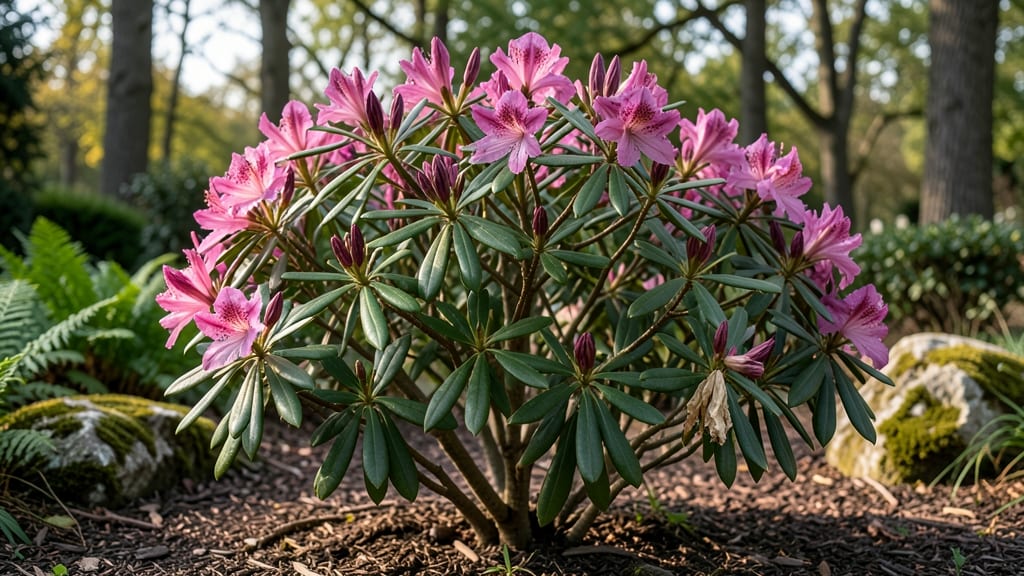
Rhododendrons do not bloom all summer: their flowers typically last 4-6 weeks, with peak blooming in spring or early summer depending on the cultivar and climate zone. Late-season varieties may extend blooms into early summer, but continuous summer flowering is rare without proper care or hybrid selection.
Most rhododendrons follow a natural seasonal rhythm tied to daylight and temperature, with spring and early summer being their prime blooming windows. 🌸 The reason behind this is their evolutionary adaptation—longer daylight hours and warming temperatures trigger the flowering process.
Some late-blooming varieties like 'PJM' or 'Elizabeth' might extend their display into June, but true summer-long blooms are uncommon unless you're growing reblooming hybrids specifically bred for extended flowering.
What's fascinating is how climate zones play a role—rhododendrons in cooler northern regions (USDA zones 5-6) often bloom earlier and finish sooner, while those in milder southern zones (7-9) may enjoy a slightly longer display.
The key to getting the most out of your rhododendron's blooming potential lies in understanding your specific variety's needs and providing the right growing conditions.
💡 In This Article
- Rhododendron Blooming Seasons by Climate Zone
- Extending Rhododendron Blooms: Pruning and Care Tips
Rhododendron blooming seasons by climate zone
Rhododendron blooming cycles are primarily triggered by daylength (photoperiodism) and temperature thresholds. Most cultivars require 12-14 hours of daylight combined with soil temperatures above 50°F (10°C) to initiate bud formation.
In northern climates (USDA zones 5-6), this typically occurs in late April to early May, while southern zones (7-9) may see blooms start as early as February—but both regions experience peak flowering within a 4-6 week window.
The vernalization process (cold requirement) varies by cultivar. Early bloomers like 'Nova Zembla' need minimal cold exposure, while late varieties such as 'Catawbiense Grandiflorum' may require 600-1,000 chill hours below 45°F (7°C).
This explains why northern gardens often see earlier blooms—cooler springs delay bud break, while southern gardens with milder winters may experience staggered flowering over 8-10 weeks instead of a concentrated burst.
Climate also affects bloom duration. In USDA zone 5, where winters are harsh, rhododendrons typically bloom for 3-4 weeks due to rapid temperature fluctuations. Conversely, zone 9 gardens with stable 65-75°F (18-24°C) conditions can extend blooms to 6-8 weeks through gradual temperature shifts.
The heat tolerance threshold of most rhododendrons is 95°F (35°C)—above this, buds may abort, cutting blooms short.
Daylight hours play a critical role in reblooming. Most rhododendrons are short-day plants, meaning they flower when daylight decreases. This is why late-summer blooms are rare—the increasing daylight after the summer solstice (June 21) suppresses bud formation.
Exception: Reblooming hybrids like 'Bow Bells' or 'Tundra' have been bred to tolerate longer daylight periods, but even these typically produce two smaller flushes rather than continuous blooms.
Consider these regional blooming patterns:
- Zone 5-6 (Cool Continental): Peak blooms in May, lasting 3-4 weeks due to rapid spring warming
- Zone 7 (Humid Subtropical): Staggered blooms from March to June, with some cultivars reblooming in fall
- Zone 9 (Mediterranean):** Extended blooms from February to May, with late varieties lasting until early June
The science behind this timing lies in the plant's hormonal balance. As temperatures rise, auxin production decreases while gibberellins increase—triggering bud break. However, once temperatures exceed 85°F (29°C) for prolonged periods, ethylene production spikes, causing buds to drop. This is why summer blooms are biologically challenging for most rhododendrons.