
Blooming
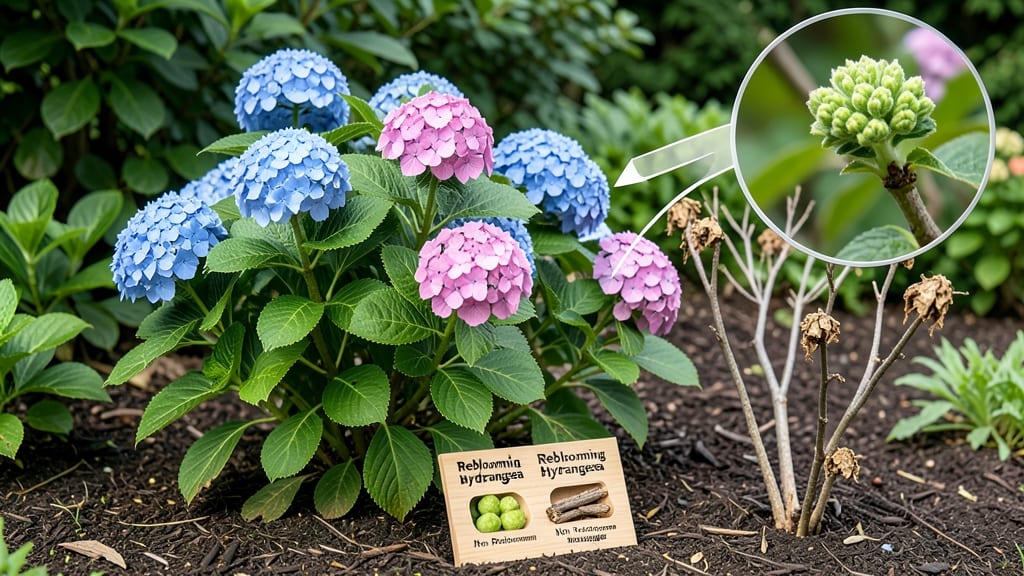
Whether hydrangeas bloom more than once depends entirely on the variety, with some like 'Endless Summer' producing two stunning flower displays per season when pruned properly. Others, such as 'Annabelle,' bloom just once annually on last year's growth, requiring different pruning timing.
Hydrangea blooming habits are all about timing and variety—some types set buds on old wood (last year's growth) while others form new blooms on fresh stems. 🌸 The key difference is that rebloomers like 'Limelight' or 'Nikko Blue' need strategic summer pruning to encourage a second flush, while non-rebloomers like 'Bigleaf' or 'Oakleaf' only bloom once on last season's branches.
Climate plays a role too—cooler northern regions often see more reliable reblooming than hot southern zones.
What's fascinating is how these habits affect your garden planning. Rebloomers reward patience with extended color, but they demand more attention—missing the right pruning window can mean sacrificing that second bloom. Meanwhile, non-rebloomers are lower-maintenance but require precise winter cuts to avoid cutting off next year's flowers entirely.
💡 In This Article
- Reblooming vs. Non-Reblooming Hydrangea Types Explained
- Pruning Hydrangeas for Maximum Blooms: A Variety Guide
Reblooming vs. non-reblooming hydrangea types explained
Hydrangeas fall into two distinct blooming categories based on where they set flower buds. Reblooming varieties like 'Endless Summer' or 'Limelight' produce flowers on both old wood (last year's growth) and new wood (current season's stems), allowing them to bloom twice—once in early summer and again in fall.
This dual-flowering occurs because these types develop flower buds on both mature branches and fresh shoots, giving gardeners extended color displays. 🌿 The trade-off is that they require precise summer pruning to maintain this habit, as cutting back too aggressively can remove next year's blooms.
The science behind this involves the plant's growth hormones and environmental cues. Rebloomers respond to temperature shifts—buds form on old wood in late summer/fall, then new buds develop on current growth after the first bloom.
Non-rebloomers like 'Annabelle' or 'Grandiflora' only set buds on old wood during the previous summer/fall, meaning they bloom just once per year. This single flush typically occurs between May and July, with flowers lasting 4-6 weeks before fading.
The key difference lies in their genetic programming: rebloomers have evolved to take advantage of longer growing seasons in certain climates.
Climate zones dramatically influence reblooming success. In USDA zones 5-7, where winters are cold but summers are moderate, rebloomers often perform exceptionally well, producing two strong flushes. However, in hotter southern zones (8-10), the intense summer heat can stress rebloomers, sometimes causing them to skip the second bloom entirely.
Non-rebloomers tend to be more reliable in these warmer climates since they don't rely on new growth to produce flowers. 🌡️ The ideal scenario for rebloomers is a location with cool springs, warm summers, and crisp autumns—conditions that mimic their native Japanese mountain habitats.
Visual differences between the types help gardeners identify them. Rebloomers often have more compact growth habits and smaller individual flowers that appear in clusters. Their foliage tends to be slightly darker green. Non-rebloomers typically feature larger, showier blooms on more sprawling stems, with lighter green leaves.
For example, 'Annabelle' produces 6-inch-wide white blooms on 3-5 foot stems, while 'Endless Summer' offers 3-4 inch flowers in various colors on 2-4 foot bushes. These physical traits reflect their different blooming strategies.
Understanding these distinctions is crucial for garden planning. Rebloomers demand more maintenance but reward gardeners with nearly year-round interest. Non-rebloomers require less upkeep but provide a dramatic single-season display. The choice often comes down to your gardening goals: extended color versus low-maintenance beauty.
For those in transitional climates, hybrid varieties like 'Vanille Fraise' offer a middle ground, blooming reliably on new wood while producing stunning flowers.
What most gardeners don't realize is how light exposure affects blooming patterns. Rebloomers need at least 6 hours of sunlight daily to produce their second flush, while non-rebloomers can tolerate partial shade (3-6 hours of sun).
This is because new wood growth—where rebloomers set their second set of buds—requires more energy from photosynthesis. Positioning your hydrangeas correctly can mean the difference between a single bloom and that coveted second display. 🌞