
Blooming
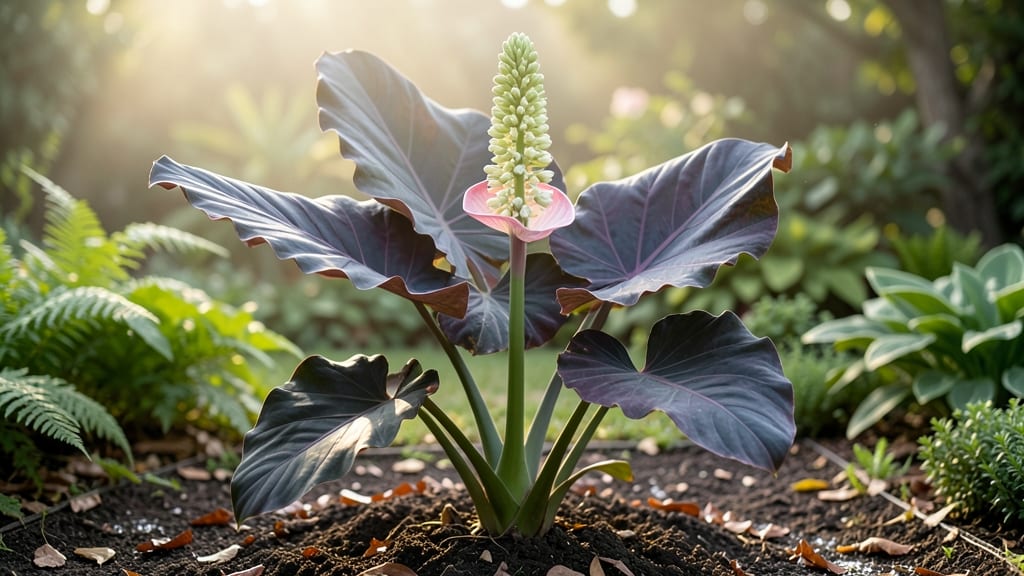
Elephant ears do bloom flowers, but popular ornamental varieties like Colocasia 'Black Stem' or 'Illustris' prioritize lush foliage and rarely produce blooms. Whether they flower depends on their type, maturity, and growing conditions.
Most elephant ears you see in gardens are actually sterile cultivars bred specifically for their dramatic leaves rather than flowers. 🌿 The energy that would go into blooming is redirected to growing larger, more vibrant foliage—which is why these varieties often skip flowering entirely.
Even when they do produce flowers, they're typically small and short-lived, tucked away among the leaves. Tropical varieties like Alocasia species are more likely to bloom than their Colocasia counterparts, but it still requires specific conditions.
The key to encouraging blooms lies in replicating their natural tropical environment. These plants need bright, indirect light for at least six hours daily, consistently moist (but not soggy) soil, and temperatures above 60°F.
I've found that adding a balanced fertilizer in early spring gives them the extra nutrients they need to shift energy toward flowering. Patience is crucial—young plants may take 2-3 years before they're mature enough to bloom, even under ideal conditions.
💡 In This Article
- Why Some Elephant Ears Skip Flowering Entirely
- Encouraging Blooms in Elephant Ears: Proven Techniques
Why some elephant ears skip flowering entirely
Many elephant ears you encounter in gardens are sterile cultivars specifically developed for their striking foliage rather than flowers. 🌿 These plants undergo selective breeding to maximize leaf size and color intensity, which diverts their energy away from reproductive processes.
For example, the popular Colocasia 'Black Stem' variety focuses nearly all its resources on producing larger, darker leaves rather than developing flowers. This is similar to how some ornamental peppers are bred to prioritize fruit color over seed production.
The decision to bloom or not is fundamentally about energy allocation. Elephant ears, like many tropical plants, face a biological trade-off between growing leaves (which capture sunlight for photosynthesis) and producing flowers (which require significant energy and resources).
In their natural habitat, these plants bloom when conditions are optimal—typically during warm, humid seasons. However, when grown as ornamentals in temperate climates, many varieties simply don't have the energy reserves to support both massive foliage and flowering simultaneously.
Light exposure plays a crucial role in triggering blooms. Most flowering varieties need bright, indirect sunlight for 6-8 hours daily to stimulate flower production. Without sufficient light, the plant prioritizes leaf growth to maximize photosynthesis.
Temperature also matters—Alocasia species, which are more likely to bloom than Colocasia, thrive in warmer conditions (above 70°F), while Colocasia varieties often struggle to flower below 65°F. Humidity levels above 60% further encourage blooming by mimicking their tropical origins.
Maturity is another critical factor. Young elephant ears may take 2-3 years to reach flowering age, even under ideal conditions. The plant must first establish a robust root system and sufficient foliage before diverting energy to reproductive growth.
This is why many gardeners see their first blooms only after the plant has grown significantly larger. For instance, a 3-foot-tall Colocasia plant might not bloom until it reaches 4-5 feet in height, demonstrating how size correlates with reproductive readiness.
There's also a genetic distinction between Colocasia and Alocasia species. Alocasia varieties are generally more likely to bloom because they originate from regions with more consistent warm climates.
Their flowers often appear as striking, arrowhead-shaped spikes that can reach 12-18 inches tall, while Colocasia blooms tend to be smaller and less showy. This difference explains why tropical Alocasia 'Polly' might produce flowers in a greenhouse setting while Colocasia 'Mojito' remains flowerless despite identical care.
Even when conditions are perfect, some elephant ears simply never bloom because they've been bred for ornamental value rather than reproduction. These sterile varieties represent a trade-off gardeners make for dramatic foliage that requires less maintenance and attention.
Understanding this biological and horticultural context helps explain why your elephant ears might be leafy but flowerless—and what you can do to change that.